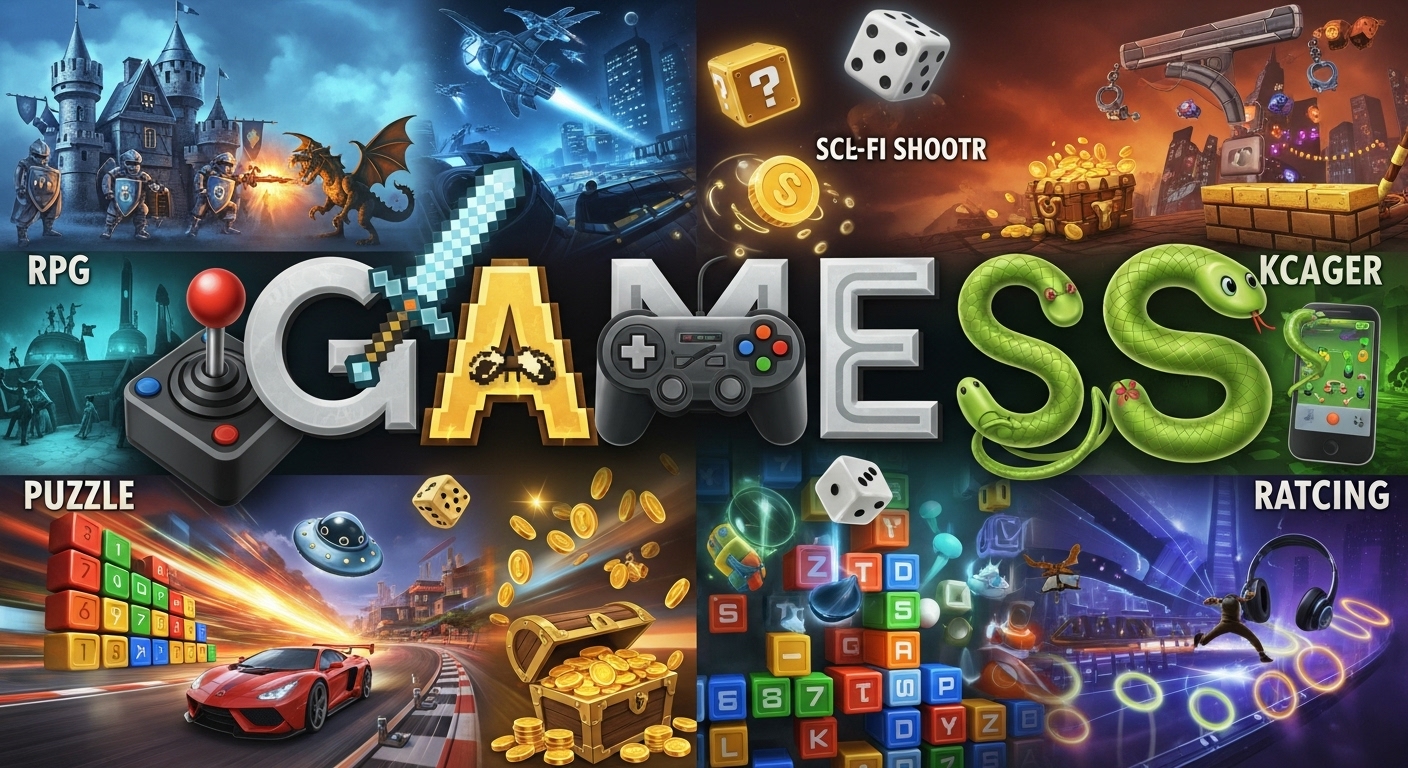

Gaming has evolved tremendously over the past few decades, transforming from simple pixelated experiences into vast, immersive universes. The world of games is no longer confined to children playing in front of a screen. It now encompasses people of all ages and backgrounds, offering experiences that range from thrilling adventures to intricate simulations of real life. Today, games are a reflection of creativity, technology, and human interaction. In this blog, we will explore the uniqueness of games, the different types available, and the reasons behind their immense popularity.
The Origins of Gaming
Gaming as we know it today began with basic electronic devices in the late twentieth century. Early games like Pong and Space Invaders captured the imagination of players by offering simple mechanics but challenging gameplay. These early experiences laid the foundation for what would become a multi-billion-dollar industry. As technology progressed, games began to incorporate richer graphics, more complex narratives, and interactive environments. The evolution from simple two-dimensional screens to high-definition 3D worlds marked a significant shift in gaming, enabling players to immerse themselves fully in digital adventures.
The Rise of Unique Game Genres
One of the most fascinating aspects of gaming is the diversity of genres. From role-playing games to simulation and puzzle games, each genre offers a unique experience tailored to different types of players. Role-playing games, often referred to as RPGs, allow players to step into the shoes of a character, making choices that influence the story. These games combine narrative depth with strategic decision-making, often requiring players to develop skills, manage resources, and interact with other characters in complex ways.
Simulation games, on the other hand, aim to replicate real-world experiences. They range from city-building simulations to life simulations where players control virtual characters and their everyday lives. These games allow players to experiment with scenarios that might be impossible in real life, offering both entertainment and learning opportunities. Puzzle and strategy games challenge cognitive skills, encouraging players to think critically and solve complex problems. The sheer variety of genres ensures that there is something for everyone in the world of gaming.
The Role of Storytelling in Games
Storytelling in games has become increasingly sophisticated. Modern games are not just about action or mechanics; they are about narratives that engage players emotionally. Titles with strong storytelling elements draw players into their worlds, creating connections between the player and the characters. The narrative experience can evoke emotions such as joy, sadness, fear, and excitement, making gaming a deeply personal experience.
Games like interactive dramas allow players to influence the storyline, creating a unique narrative with every playthrough. This level of agency sets games apart from other forms of entertainment, such as movies or books. The combination of storytelling, visuals, and interactivity makes gaming a powerful medium for conveying complex ideas and emotions.
Multiplayer and Social Interaction
Another factor that makes games unique is their ability to bring people together. Multiplayer games have become a cornerstone of modern gaming, allowing players to compete or collaborate with others worldwide. Online multiplayer games foster social interaction, teamwork, and communication, creating communities that extend beyond the game itself.
Competitive games, such as esports, have transformed gaming into a professional arena where players can showcase their skills on a global stage. Social games, meanwhile, emphasize collaboration and connection, enabling players to build relationships and work together to achieve common goals. Whether it’s strategizing in a team-based game or making friends through shared experiences, gaming has become a social phenomenon.
The Impact of Virtual Reality and Augmented Reality
The introduction of virtual reality (VR) and augmented reality (AR) has further revolutionized gaming. VR creates fully immersive environments where players feel physically present within the game world, while AR blends digital elements with the real world. These technologies have expanded the possibilities for game design, offering experiences that were once unimaginable.
VR games allow players to explore fantastical worlds, engage in physical activities, and interact with digital objects as if they were real. AR games, on the other hand, bring gaming into everyday life, overlaying interactive elements onto real-world settings. Both technologies challenge traditional notions of gaming, pushing the boundaries of immersion and interactivity.
Games as a Tool for Learning and Development
Beyond entertainment, games have increasingly been recognized for their educational potential. Educational games use engaging mechanics to teach subjects such as math, science, language, and history. These games encourage active learning by requiring players to solve problems, make decisions, and think critically.
Strategy games and simulations can also enhance cognitive skills, including memory, spatial awareness, and multitasking. Additionally, collaborative games promote social skills, teamwork, and communication. By combining fun with learning, games provide a unique platform for personal growth and skill development.
The Emotional and Psychological Impact of Games
Games have a profound emotional and psychological impact on players. They offer a sense of achievement, challenge, and progress, which can be deeply satisfying. Many players experience a sense of flow when engaged in gaming, a state where they are fully immersed and focused on the task at hand.
Moreover, games can provide an escape from stress and daily routines, allowing players to explore new worlds and experiences in a safe environment. Narrative-driven games can also foster empathy by allowing players to experience different perspectives and lives. While excessive gaming can have negative effects, responsible gaming can be a source of relaxation, inspiration, and emotional fulfillment.
The Future of Gaming
The future of gaming promises to be even more exciting. Advances in artificial intelligence, graphics, and interactive technology are expanding the possibilities for what games can achieve. Procedurally generated worlds, adaptive narratives, and intelligent NPCs (non-player characters) are just the beginning of what players can expect.
Cloud gaming is making high-quality gaming accessible without the need for expensive hardware, while mobile games continue to reach new audiences worldwide. The integration of gaming with other forms of media, such as films, music, and literature, will likely create even richer experiences. The gaming industry is poised to continue evolving, pushing the boundaries of creativity and technology.
Games as a Cultural Phenomenon
Games are no longer just a pastime; they have become a significant cultural phenomenon. They influence art, fashion, storytelling, and social interaction. Gaming conventions, tournaments, and online communities have created a culture around games that is vibrant and diverse.
Furthermore, games are increasingly being recognized as an art form. The combination of visual design, music, storytelling, and interactivity allows games to convey messages, evoke emotions, and inspire creativity in ways that other mediums cannot. As society continues to embrace gaming, it will undoubtedly play a larger role in shaping culture and entertainment.
Conclusion
Games are more than just a form of entertainment; they are a testament to human creativity, technological innovation, and social connection. From simple beginnings to complex, immersive worlds, games have grown to offer experiences that are engaging, educational, and emotionally impactful. With diverse genres, compelling storytelling, multiplayer interactions, and cutting-edge technology, gaming has something to offer everyone.
As the industry continues to evolve, it will push the boundaries of what is possible, creating experiences that are more immersive, interactive, and transformative than ever before. Whether for fun, learning, or social connection, games have firmly established themselves as an essential part of modern life. They are a window into our imagination, a playground for creativity, and a bridge connecting people across the world. The universe of games is vast and ever-expanding, promising endless adventures for those willing to explore it.