Introduction: The Enduring Appeal of Games
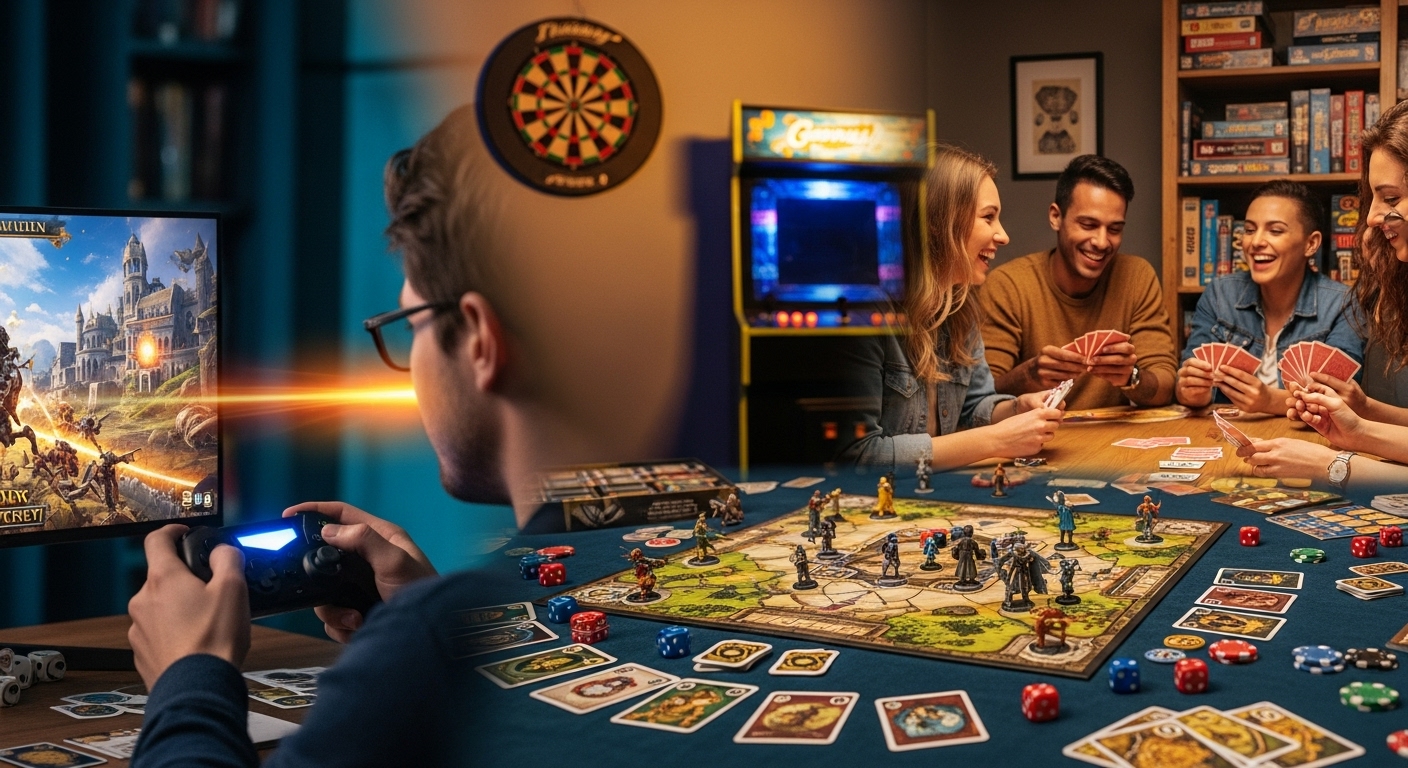
Games have been a part of human culture for centuries, whether it’s a simple board game, a backyard sport, or a complex digital experience. What started as a way to pass time or tell stories has now transformed into a global industry, shaping how we entertain ourselves, connect with others, and even learn. From the early days of pixelated graphics to the cutting-edge virtual realities of today, the gaming world has undergone a profound evolution. This post takes a closer look at the journey of games and what the future holds for this ever-expanding medium.
The Birth of Video Games: A New Frontier
The video game industry had its humble beginnings in the 1950s and 60s, with pioneers creating simple games like Tennis for Two and Pong. These early games were a far cry from the immersive experiences we have today, with pixelated graphics and rudimentary controls. However, they laid the groundwork for an entirely new form of entertainment that would soon captivate millions.
In the 1980s, arcades became the go-to place for gaming enthusiasts, with games like Space Invaders and Pac-Man becoming household names. These games represented a major leap forward, introducing complex gameplay, storytelling, and multiplayer mechanics. The rise of home consoles in the 90s, including the Sega Genesis and the Super Nintendo, further cemented gaming as a mainstream form of entertainment. It was clear: video games were here to stay.
The Rise of 3D Graphics: A New Dimension of Play
The late 90s and early 2000s marked a major turning point in the world of gaming with the introduction of 3D graphics. Titles like Super Mario 64 and The Legend of Zelda: Ocarina of Time opened up new possibilities for game design, offering players vast, immersive worlds to explore. Suddenly, games weren’t just about beating levels or scoring points—they became experiences that allowed players to immerse themselves in expansive, dynamic environments.
The transition to 3D graphics also spurred innovation in gameplay mechanics, leading to more complex and interactive game worlds. Characters could now move in three-dimensional space, and the stories told in games became more intricate and emotionally engaging. This era saw the rise of some of the most beloved franchises of all time, including Final Fantasy, Metal Gear Solid, and Grand Theft Auto.
The Advent of Online Gaming: Connecting the World
With the growth of the internet in the late 90s and early 2000s, online multiplayer games began to gain popularity. Games like EverQuest and World of Warcraft allowed players to connect and collaborate in virtual worlds in ways never before possible. The concept of playing against or with people from around the globe revolutionized the gaming experience, turning it into a communal activity rather than a solitary one.
The success of these online games paved the way for modern-day multiplayer games like Fortnite, Apex Legends, and Call of Duty: Warzone, which have millions of active players. These games have become more than just pastimes; they are social spaces where players meet, form communities, and even build careers as professional gamers. Online gaming has blurred the lines between gaming and social interaction, with platforms like Twitch allowing players to stream their gameplay and engage with their audiences in real-time.
Mobile Gaming: Gaming Anywhere, Anytime
In the 2010s, mobile gaming exploded onto the scene, transforming the gaming landscape. With smartphones in nearly every pocket, games like Angry Birds, Candy Crush, and Pokémon GO brought gaming to a massive, untapped audience. Mobile games introduced a new form of accessibility, allowing players to game on the go, whether they were commuting, waiting in line, or relaxing at home.
Mobile gaming has also given rise to a new generation of casual gamers, broadening the appeal of video games beyond the traditional hardcore gamer demographic. The simplicity and portability of mobile games have made them a staple of modern entertainment, and as smartphones continue to evolve, the quality and scope of mobile games are only set to increase.
Virtual Reality and Augmented Reality: The Next Frontier
As technology continues to advance, we are now entering the era of virtual reality (VR) and augmented reality (AR), two innovations that are pushing the boundaries of what gaming can be. VR gaming allows players to fully immerse themselves in a 3D environment using specialized headsets and controllers. Games like Beat Saber and Half-Life: Alyx are pushing the limits of immersion, offering experiences that feel incredibly lifelike.
On the other hand, AR games like Pokémon GO blend the real world with the virtual, allowing players to interact with digital elements in their environment. These technologies are still in their infancy but are already offering glimpses into a future where gaming can be experienced in entirely new ways. The possibilities for VR and AR in gaming are immense, with potential applications in everything from fitness and education to storytelling and entertainment.
The Rise of Indie Games: Creativity Unleashed
In recent years, the indie game scene has flourished, with small developers creating highly innovative and unique games. Thanks to platforms like Steam, itch.io, and crowdfunding sites like Kickstarter, independent developers have the opportunity to reach large audiences without needing the backing of major publishers. This has led to a wave of highly creative and experimental games that might not have seen the light of day in the past.
Titles like Hollow Knight, Celeste, and Undertale have become critically acclaimed and beloved by players worldwide, despite being developed by small teams or even solo developers. Indie games often push the boundaries of storytelling, art, and gameplay, offering fresh and unconventional experiences that big-budget games may overlook. As more players seek out innovative, thought-provoking experiences, indie games are helping to diversify the gaming landscape and redefine what games can achieve.
Gaming as a Career: The Rise of Professional Esports
With the increasing popularity of competitive gaming, esports has evolved into a multi-billion-dollar industry, with professional players, coaches, and teams all vying for the top spot in games like League of Legends, Dota 2, and Overwatch. Esports tournaments now fill arenas and are broadcast to millions of viewers worldwide, rivaling traditional sports in terms of viewership and revenue.
Being a professional gamer is no longer a pipe dream for aspiring players—it’s a legitimate career path. The rise of esports organizations, sponsorships, and media coverage has turned gaming into a highly lucrative profession for those who can master the competitive scene. Streaming platforms like Twitch have also created new avenues for gamers to earn a living, as viewers flock to watch their favorite players live-stream their games and interact with their fans.
The Future of Games: What’s Next?
As we look ahead, the future of gaming is incredibly exciting. With technologies like AI, cloud gaming, and 5G connectivity continuing to evolve, we can expect even more groundbreaking changes in the coming years. Cloud gaming, for instance, could eliminate the need for expensive gaming consoles and PCs by allowing players to stream games directly to their devices.
Additionally, the integration of artificial intelligence in games is set to revolutionize the way we experience gameplay. AI could create more responsive, dynamic game worlds where non-playable characters (NPCs) act with greater intelligence, making the gaming world feel more alive. The rise of immersive technologies like VR and AR also promises to create more interactive and engaging experiences, potentially transforming gaming into a completely new form of entertainment.
Conclusion: Gaming as a Cultural Force
From humble beginnings to a multi-billion-dollar industry, gaming has come a long way in a relatively short period. Today, games are a cultural force, influencing everything from entertainment to education and even social movements. Whether it’s through the rise of esports, the emergence of VR, or the explosion of mobile gaming, one thing is clear: gaming is here to stay, and its influence will only continue to grow.
As technology continues to advance, we can expect games to become even more immersive, accessible, and engaging. What started as a pastime for a niche audience has evolved into a global cultural phenomenon, bringing together people from all walks of life to experience the joy and excitement of play.