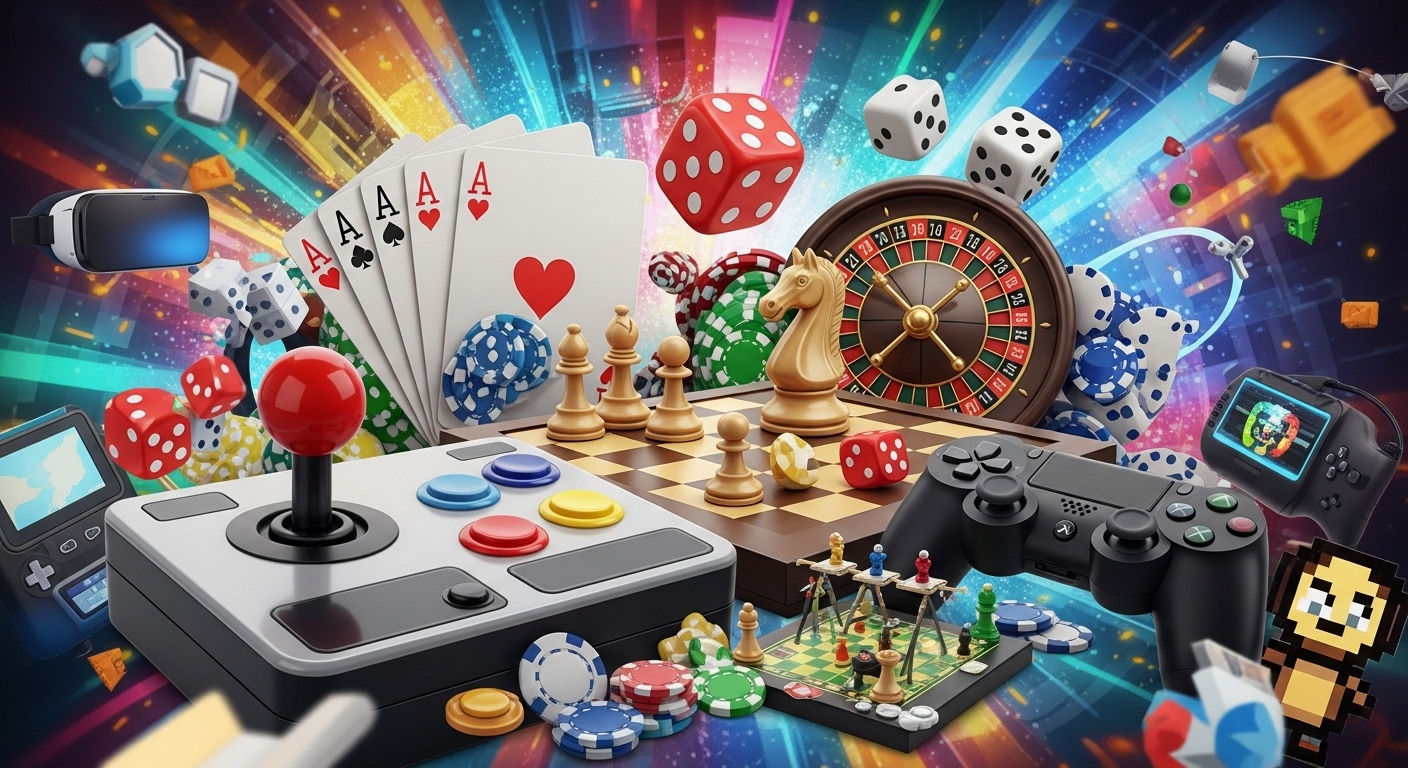

Games have always been more than just a pastime. From ancient board games played by kings to modern virtual reality adventures, the evolution of games reflects humanity’s desire to challenge, connect, and immerse. In today’s fast-paced world, games have become a powerful medium, bridging creativity, storytelling, and technology. The allure of games lies not only in their ability to entertain but also in their capacity to teach, inspire, and transform.
The Origins of Gaming: A Glimpse Into the Past
The history of games stretches back thousands of years. Archaeological discoveries reveal that early humans engaged in strategic board games like Senet in ancient Egypt and the Royal Game of Ur in Mesopotamia. These games were not merely leisure activities; they reflected culture, religion, and social structure. Over centuries, games evolved to include card games, dice, and eventually modern board games that focus on strategy, luck, and social interaction.
With the advent of technology, the gaming landscape experienced a revolutionary shift. Video games emerged in the mid-20th century, transforming entertainment into a digital experience. Unlike traditional games, video games offered immersive worlds, interactive storytelling, and challenges that adapted to players’ skills. This shift marked the beginning of an era where imagination and technology converged to create experiences beyond the limits of reality.
The Rise of Video Games: More Than Just Play
Video games are often dismissed as mere entertainment, but their impact reaches far beyond. Games like role-playing adventures, strategy simulations, and puzzle challenges encourage problem-solving, critical thinking, and creativity. Unlike passive media such as movies or books, video games actively engage players in decision-making and consequence evaluation.
One of the most remarkable aspects of video games is their ability to create immersive storytelling. Unlike traditional narratives, video games allow players to step into the shoes of characters, influencing the story through choices and actions. This interactive dimension creates a deeper emotional connection and fosters empathy as players navigate moral dilemmas, complex relationships, and fictional worlds.
Board Games: A Timeless Connection
Despite the surge of digital gaming, board games continue to hold a special place in the hearts of enthusiasts. Modern board games have evolved far beyond simple dice rolling and card drawing. They offer intricate mechanics, strategic depth, and collaborative gameplay that challenge the mind while promoting social interaction.
Games like cooperative adventures, competitive strategy challenges, and storytelling-based experiences engage players on multiple levels. Board games also provide an opportunity for face-to-face interaction in a world dominated by screens. Whether it’s a casual family game night or a competitive tournament with friends, board games foster communication, collaboration, and a sense of shared achievement.
Games as Learning Tools: Education Through Play
Games are increasingly recognized as powerful educational tools. The concept of learning through play is rooted in psychology, where interactive experiences promote memory retention, problem-solving skills, and creativity. Educational games transform complex subjects into engaging experiences, making learning enjoyable and effective.
Simulation games, for instance, allow players to experiment in risk-free environments. Flight simulators teach aviation skills, strategy games enhance critical thinking, and language-learning games improve vocabulary and comprehension. Beyond academics, games also cultivate emotional intelligence, teamwork, and resilience by presenting challenges that require adaptive strategies and thoughtful reflection.
The Role of Virtual Reality and Augmented Reality in Gaming
The future of gaming is closely intertwined with immersive technologies such as virtual reality (VR) and augmented reality (AR). VR transports players into fully realized digital worlds, offering experiences that feel tangible and immediate. From exploring distant planets to engaging in realistic combat simulations, VR redefines the boundaries of interactive storytelling.
Augmented reality, on the other hand, merges digital elements with the real world, creating hybrid experiences. Games that use AR encourage exploration, physical activity, and real-world problem-solving. The combination of VR and AR has opened new horizons in gaming, education, therapy, and social engagement, demonstrating that games are no longer confined to screens or tabletop boards—they are evolving into fully integrated experiences that shape perception and interaction.
The Psychological Impact of Gaming
Beyond entertainment, games have a profound psychological impact. They offer escapism, stress relief, and a sense of achievement. Players experience reward systems, goal setting, and progression, which can enhance motivation and self-efficacy. Multiplayer and online games also provide social communities where players form bonds, collaborate on objectives, and experience collective triumphs.
However, like any powerful tool, gaming requires balance. Excessive gaming can lead to social isolation or reduced physical activity, but when approached mindfully, it becomes a source of mental stimulation, creativity, and connection. Many studies now explore the cognitive benefits of gaming, highlighting improvements in attention, spatial reasoning, and multitasking abilities.
Games as Art: The Intersection of Creativity and Technology
In recent years, games have increasingly been recognized as a legitimate form of art. Visual design, music composition, narrative writing, and interactive mechanics converge to create experiences that are both aesthetically and emotionally compelling. Artistic games challenge conventional storytelling by allowing players to influence the narrative flow, explore symbolism, and interpret meaning in personalized ways.
Indie games, in particular, have pushed the boundaries of creativity, offering experimental mechanics, minimalist design, and unconventional narratives. These games demonstrate that the artistry of gaming lies not in photorealistic graphics but in the capacity to evoke emotion, provoke thought, and inspire wonder.
The Social Dimension of Gaming
Gaming has always been a social activity, whether gathering around a chessboard or connecting online with millions of players worldwide. Multiplayer games foster teamwork, communication, and strategic collaboration. Competitive esports have transformed gaming into a spectator sport, where players and fans experience the thrill of performance, skill, and community.
Social gaming extends beyond competition. Cooperative games, role-playing adventures, and shared world experiences create bonds between players. Online communities, forums, and fan-driven content expand the social dimension, making gaming a collaborative and culturally significant phenomenon.
The Future of Gaming: Endless Possibilities
The future of gaming promises even greater innovation. Artificial intelligence will personalize experiences, adaptive storytelling will respond to player decisions in real-time, and immersive environments will blur the line between reality and imagination. Games will continue to influence education, therapy, and social connection, making them essential tools for personal and societal growth.
As technology advances, the core appeal of games remains the same: they invite exploration, challenge minds, and ignite creativity. The best games transcend age, culture, and background, offering experiences that are universally engaging and deeply human.
Conclusion: Games as a Reflection of Humanity
Games are more than entertainment—they are a mirror of human ingenuity, curiosity, and social connection. From ancient board games to modern virtual adventures, games have continually evolved to challenge, teach, and inspire. They reflect our creativity, our desire to explore, and our capacity to connect with others.
In a world where technology continues to advance and lifestyles become increasingly digital, games remain a timeless medium that celebrates imagination, strategy, and emotion. They are an art form, a learning tool, and a social connector all at once. As we embrace the possibilities of gaming, we discover that the true magic of games lies not in the play itself but in the experiences, lessons, and connections they create.
Games are a testament to the power of human creativity and the joy of shared experiences. They remind us that even in the most complex or fantastical worlds, the essence of gaming is simple: curiosity, challenge, and the thrill of discovery.