
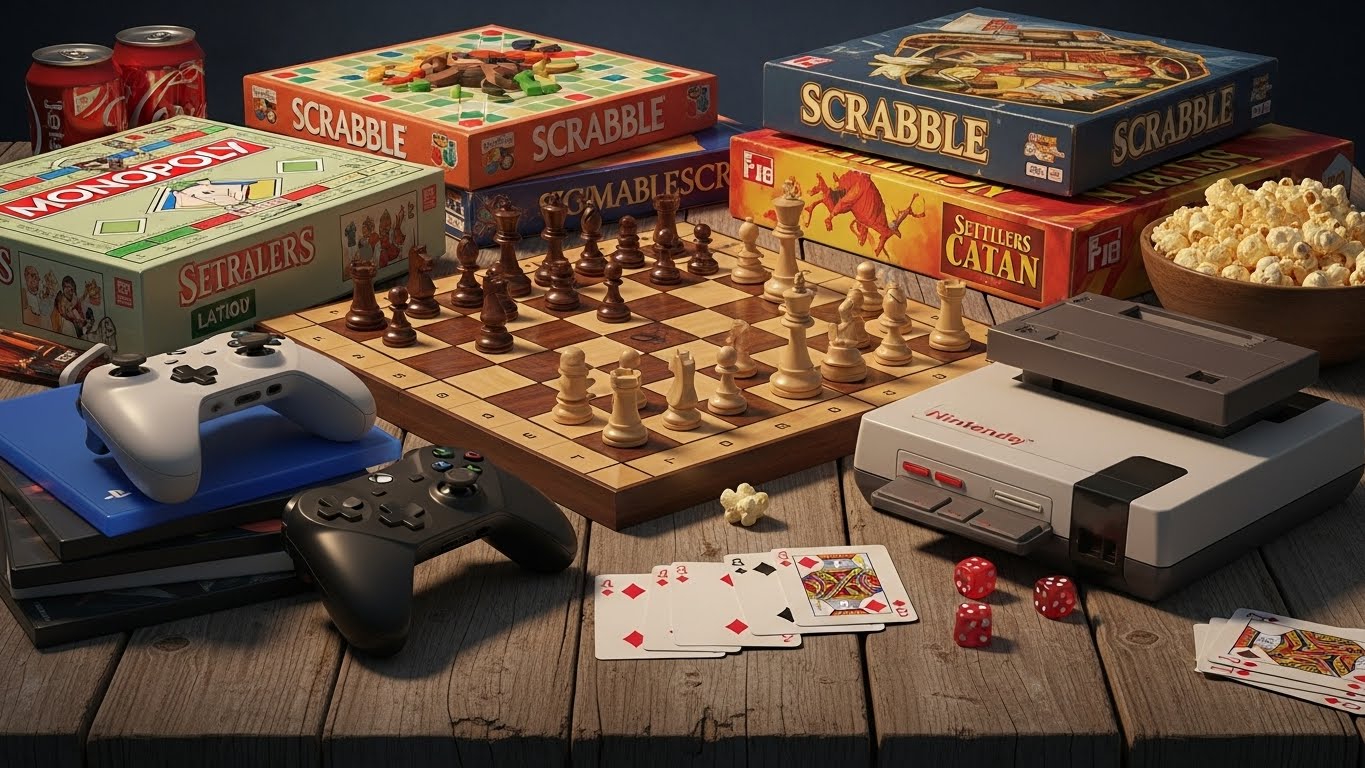
Games have existed for centuries, evolving from simple physical activities to complex digital universes that captivate millions around the globe. Whether played on a board, a field, a screen, or through the imagination, games represent one of humanity’s most universal expressions of creativity and competition. In today’s world, the gaming industry has become a giant cultural force, influencing entertainment, technology, social interaction, and even education. This blog explores the power of games, why they matter, how they evolved, and what their future holds.
The Universal Language of Play
Games have always been a part of human life. Even before modern technology, ancient civilizations created games to entertain, teach, and bond communities. These early forms of play reveal something important about human nature: people are wired to enjoy challenges, rewards, strategy, and imagination. The universal desire to play connects people across ages, cultures, and geographies. Whether competing in a physical sport, solving a puzzle, or exploring a digital world, humans use games to express creativity, relieve stress, and build meaningful experiences.
The Evolution of Games Through History
The history of games is long and diverse. Early games such as board games, card games, and outdoor activities helped communities develop social skills and strategic thinking. As societies evolved, so did the complexity of games. The invention of printing expanded the availability of card and board games. The industrial revolution introduced mass-produced toys and game sets.
The biggest transformation came with electronics and computers. Video games emerged in the mid-20th century and quickly changed the meaning of play forever. Simple arcade titles grew into sprawling digital adventures, and home consoles brought gaming into living rooms worldwide. Games became interactive stories, competitive sports, and creative worlds, shaping a new era of entertainment.
Video Games and the Digital Revolution
Video games represent one of the greatest innovations in entertainment history. Advanced graphics, improved technology, and powerful storytelling have turned digital gaming into a global phenomenon. Today’s video games offer experiences that were once unimaginable: realistic environments, deep narratives, quests filled with emotion, and vast online communities.
Players are no longer just observers; they participate in the story, make decisions, and influence outcomes. This interactivity elevates gaming beyond passive entertainment. It becomes a form of art, expression, and personal engagement, blending imaginative design with advanced technology.
The Power of Storytelling in Modern Games
One of the most impressive strengths of modern video games is storytelling. Developers craft experiences that rival films and novels, creating characters that players connect with emotionally. Good games blend narrative with gameplay, making the player feel responsible for outcomes. Whether exploring ancient worlds, solving mysteries, or surviving futuristic challenges, gaming narratives offer unforgettable emotional journeys.
Story-driven games allow players to explore morality, identity, and consequence. Choices matter, shaping the direction of the game and encouraging players to think critically. This dynamic storytelling sets games apart from traditional media and makes them one of the most powerful storytelling platforms of the modern age.
The Rise of Online Multiplayer Communities
The rise of online gaming connected millions of players around the world. Gamers can now team up with friends, compete against strangers, and join global communities. Online multiplayer games create social networks where friendships form and teamwork thrives.
These communities are built on shared experiences. Cooperative missions teach communication and strategy. Competitive matches test skill, patience, and discipline. Online environments also encourage diversity, connecting people from different cultures through a common passion for gaming. The social dimension of games has become one of the most influential forces shaping modern online culture.
The Competitive Landscape and Esports
Competitive gaming has grown into a massive industry known as esports. Professional players train for hours, master strategies, and compete in large-scale tournaments watched by millions. Esports has become a recognized form of competition, complete with coaches, sponsors, analysts, and global fans.
The competitive structure of esports mirrors traditional sports in many ways. Teams develop precise techniques, players specialize in roles, and tournaments attract passionate audiences. Esports demonstrates how games can evolve into professional sports, reshaping career opportunities and inspiring players around the world.
Games as Creative Spaces
Many games today allow players to build, design, and create their own worlds. These creative games empower players to express imagination freely. Players can construct cities, craft stories, design characters, or even build virtual machines. The ability to create inside a game transforms the player from a consumer into a creator.
This creative aspect has inspired millions to pursue careers in design, architecture, coding, and digital art. Games have become tools for education, innovation, and artistic expression. When players build worlds, they learn problem-solving, planning, and experimentation in a playful and engaging way.
The Psychological Benefits of Games
Games offer more than entertainment. They provide significant psychological benefits that enhance mental well-being. Many games reduce stress by offering escapism and relaxing challenges. Puzzle and strategy games improve cognitive skills such as memory, focus, and critical thinking. Action games develop reflexes and hand-eye coordination.
Games that include challenges and rewards encourage persistence, resilience, and adaptability. Players learn how to overcome failure, practice patience, and develop problem-solving abilities. These skills often transfer into real-life situations, improving decision-making and confidence.
The Role of Games in Education
Educational games have shown remarkable success in making learning engaging and interactive. Schools and learning platforms use game-like techniques to teach math, science, language, and history. By incorporating rewards, challenges, and interactive storytelling, games make difficult concepts easier to understand.
Gamification extends beyond classrooms. Businesses use game-inspired systems to train employees, encourage productivity, and boost engagement. The educational potential of games continues to expand, proving that play can be a powerful tool for learning.
Mobile Gaming and Accessibility
Mobile gaming revolutionized the industry by making games available to everyone with a smartphone. People can play anywhere, anytime, without needing special equipment. This accessibility introduced gaming to new audiences, including casual players who enjoy quick and simple experiences.
Mobile games also demonstrate that the gaming world is not limited to large consoles or expensive computers. They offer creativity, social experiences, and entertainment in a portable form. This widespread accessibility has made gaming one of the most inclusive entertainment forms in the world.
The Cultural Impact of Games
Games influence culture in countless ways. Characters, stories, and trends from games inspire movies, music, fashion, and social media. Gaming events bring people together in celebration of shared passions. Game-inspired art and digital creativity have become mainstream, shaping modern cultural expressions.
Games also break barriers. They challenge stereotypes, showcase diverse narratives, and give players the chance to explore different identities and perspectives. As the gaming industry becomes more diverse, its cultural impact grows stronger.
The Economic Power of the Gaming Industry
The gaming industry has become one of the fastest-growing economic sectors in the world. Game developers, content creators, hardware manufacturers, and esports organizations all contribute to a vast ecosystem. Gaming generates jobs in design, programming, writing, marketing, sound engineering, and more.
The growth of digital distribution and mobile platforms has further expanded the market, allowing small developers to create global hits. The economic impact of gaming goes beyond entertainment; it drives innovation across technology, digital art, and online entertainment.
The Future of Games
The future of gaming promises even greater innovation. Advances in virtual reality, augmented reality, and artificial intelligence will create new types of interactive experiences. Cloud gaming will make high-quality games accessible on ordinary devices. Games will become more immersive, more realistic, and more connected.
As technology evolves, games will continue to push boundaries in storytelling, creativity, and social connection. The future will bring new genres, new communities, and new forms of play that blur the lines between reality and imagination.
Conclusion: Games as a Gateway to Imagination and Connection
Games are more than entertainment. They are a reflection of human creativity, curiosity, and passion. Whether played casually or competitively, alone or with friends, games enrich lives by offering adventure, freedom, challenge, and joy. They build communities, inspire creativity, and shape culture in powerful ways.
In a world that constantly changes, games remain a timeless source of connection and imagination. Their evolution from ancient play to digital universes proves one thing clearly: games will always be a central part of human experience, continuing to shape how people learn, connect, and dream.