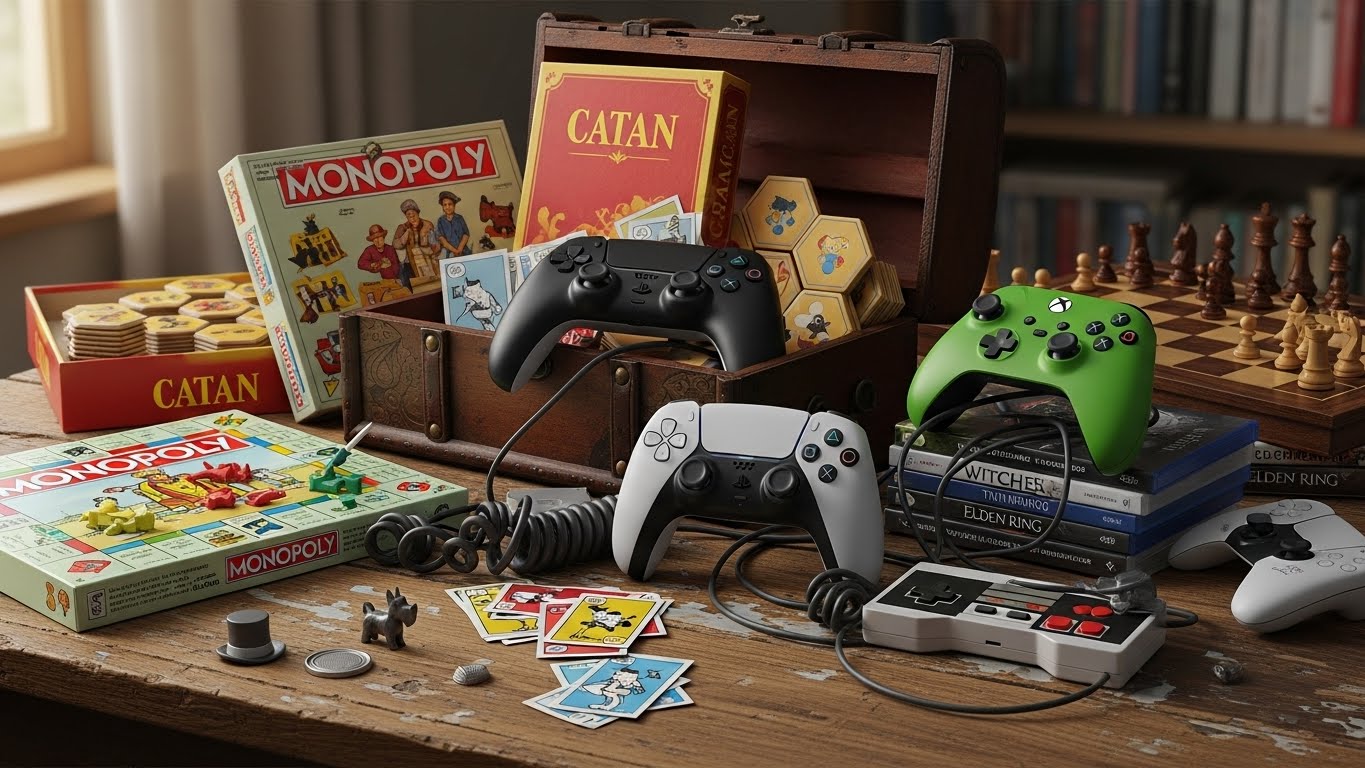

Gaming has undergone a remarkable transformation over the years. What started as a small hobby for enthusiasts has now blossomed into a global phenomenon, with billions of people around the world engaging in video games in some form. In fact, gaming has become one of the most lucrative entertainment industries globally, surpassing even music and film in revenue. This massive growth has not only changed the way we view games but also how we interact with each other, with technology, and with our environment. From the early days of arcades and 8-bit graphics to the highly immersive experiences of today’s virtual worlds, gaming has evolved to be a multifaceted cultural powerhouse. In this blog, we will take a journey through the history of gaming, from its origins to its present-day dominance, and examine where the future of gaming is headed.
The Early Days of Gaming: The 1970s and 1980s
The history of gaming can be traced back to the late 1950s and early 1960s, when computer scientists and engineers began experimenting with ways to use early computers for entertainment. However, it was in the 1970s when video games as we know them started to take shape.
The Dawn of Arcade Gaming
The first true video game to gain widespread recognition was Pong (1972), created by Atari’s co-founder Nolan Bushnell. Pong was a simple two-player ping-pong simulation, and it quickly became a hit in arcades. This marked the birth of arcade gaming and the start of a long-standing tradition of gamers congregating at arcades to compete against one another and enjoy friendly competition.
In the following years, arcade games like Space Invaders (1978), Asteroids (1979), and Pac-Man (1980) became cultural icons. These games featured simple yet addictive gameplay mechanics that attracted players of all ages. The arcade was the epicenter of gaming culture during this time, and these early video games laid the foundation for the gaming industry we know today. Players would spend hours at arcades, striving for high scores and competing for the title of “best gamer.”
The Home Console Revolution
As video games became more popular, there was a demand for home consoles that could bring the gaming experience into people’s homes. In 1977, Atari released the Atari 2600, one of the first home consoles to feature interchangeable game cartridges. This marked a significant shift in gaming, as it allowed people to play multiple games on a single machine.
Throughout the early 1980s, a variety of home gaming systems emerged, including the Nintendo Entertainment System (NES) and Sega Master System. The 8-bit graphics and sound capabilities of these consoles allowed for more complex games and introduced players to new worlds and experiences. The NES, released in 1985, is especially noteworthy for popularizing characters like Mario, who would go on to become a global gaming icon.
The Golden Age of Arcades and Consoles
The 1980s were considered the golden age of gaming, with the rapid rise of both arcade machines and home consoles. Games like Super Mario Bros. (1985) and The Legend of Zelda (1986) introduced players to expansive worlds and storytelling elements that had not been seen before. The NES, along with its iconic games, established Nintendo as a major player in the gaming industry.
Meanwhile, Sega entered the home console race in the mid-1980s with its Sega Genesis, a machine that competed directly with Nintendo’s SNES. Sega’s Genesis had more powerful hardware, and its games, such as Sonic the Hedgehog, became hugely popular. The rivalry between Sega and Nintendo, known as the “console wars,” helped shape the competitive gaming landscape that we continue to see today.
The 1990s: The Age of 3D Graphics and Online Gaming
The 1990s was a pivotal decade for gaming. It saw the advent of 3D graphics, the emergence of new genres, and the introduction of online multiplayer games. The gaming industry had truly begun to flourish, and technology was evolving at an unprecedented pace.
The Rise of 3D Games
The 1990s are often referred to as the era when 3D gaming was born. With the release of the Sony PlayStation in 1994 and the Nintendo 64 in 1996, gaming entered a new dimension—literally. These consoles featured hardware capable of rendering fully realized 3D worlds, which led to a new wave of game development.
The release of Super Mario 64 in 1996 was a watershed moment in gaming history. For the first time, players could control Mario in a three-dimensional environment, exploring the world in full 3D. The game’s open-world design, freeform navigation, and camera control were groundbreaking at the time, and it set the standard for future 3D platformers.
Meanwhile, games like Final Fantasy VII (1997) and The Legend of Zelda: Ocarina of Time (1998) took full advantage of the new technology, providing expansive worlds, complex narratives, and detailed character designs. These games revolutionized what was possible in gaming, blurring the line between entertainment and interactive storytelling.
The Emergence of Online Multiplayer
As internet access became more widespread, gaming shifted toward online multiplayer experiences. In 1994, the first widely successful online multiplayer game, Warcraft: Orcs & Humans, was released. This real-time strategy game allowed players to compete against one another over a local area network (LAN) or the internet, giving birth to the concept of online competitive gaming.
In 1999, EverQuest was released, a game that became one of the first massively multiplayer online role-playing games (MMORPGs). EverQuest allowed thousands of players to interact with each other in a shared, persistent world, marking the beginning of a new era in online gaming. This genre would go on to dominate the gaming landscape in the 2000s, with games like World of Warcraft becoming cultural phenomena.
The Console Wars: Sony vs. Nintendo vs. Sega
The 1990s also saw the rise of the “console wars” between Sony, Nintendo, and Sega. Sony’s PlayStation quickly gained a foothold in the gaming market, thanks to its superior graphics and the growing popularity of franchises like Final Fantasy and Gran Turismo. Nintendo, on the other hand, remained a dominant force with its N64, bringing games like Super Mario 64 and GoldenEye 007 into players’ homes.
Sega’s Saturn and Dreamcast systems, though innovative, struggled to compete with the PlayStation and N64. Despite this, Sega’s games, including Sonic the Hedgehog and Virtua Fighter, helped define the era and left a lasting legacy in gaming history.
The 2000s: The Era of Online Play and the Rise of Mobile Gaming
The 2000s marked the transition from traditional gaming experiences to an era of online play and mobile gaming. With the rise of broadband internet and the proliferation of smartphones, gaming took on new forms and became even more accessible to a wider audience.
Online Multiplayer Gaming Explodes
Online multiplayer gaming reached new heights in the 2000s with the release of consoles like the Xbox 360 and PlayStation 3. Xbox Live, Microsoft’s online gaming service, allowed players to connect with friends and strangers around the world to compete in games like Halo 2, Call of Duty 4: Modern Warfare, and Gears of War. The ability to connect with others online revolutionized the gaming experience, making it more social and interactive than ever before.
Meanwhile, games like World of Warcraft (2004) and Guild Wars (2005) expanded the MMORPG genre, attracting millions of players and creating massive online communities. These games offered expansive, persistent worlds where players could interact, complete quests, and engage in large-scale battles.
The Rise of Mobile Gaming
At the same time, mobile gaming began to gain traction. With the introduction of smartphones like the iPhone in 2007, casual gaming became a mainstream activity. Games like Angry Birds (2009), FarmVille (2009), and Candy Crush Saga (2012) dominated mobile platforms, offering quick, easy-to-play games that appealed to a wide range of players.
Mobile gaming’s accessibility and ease of play made it a staple of everyday life for millions of people. The convenience of gaming on smartphones allowed players to engage with games during short breaks, on public transportation, or while relaxing at home.
The 2010s: The Age of Open Worlds, Streaming, and Esports
The 2010s marked the peak of gaming’s integration into mainstream culture. With the advent of open-world games, live-streaming platforms, and the explosion of esports, gaming became a global, socially driven experience.
The Rise of Open-World Games
The 2010s saw the rise of sprawling open-world games that offered players vast, immersive environments to explore. Games like The Elder Scrolls V: Skyrim (2011), Grand Theft Auto V (2013), and The Witcher 3: Wild Hunt (2015) set the bar for expansive, player-driven narratives. These games allowed players to explore at their own pace, make choices that impacted the story, and interact with a richly detailed world.
Open-world games became the epitome of player freedom, with vast landscapes to explore, endless quests to undertake, and dynamic ecosystems to discover. These games not only offered rich single-player experiences but also paved the way for the rise of multiplayer online