
Introduction: A World of Infinite Possibilities
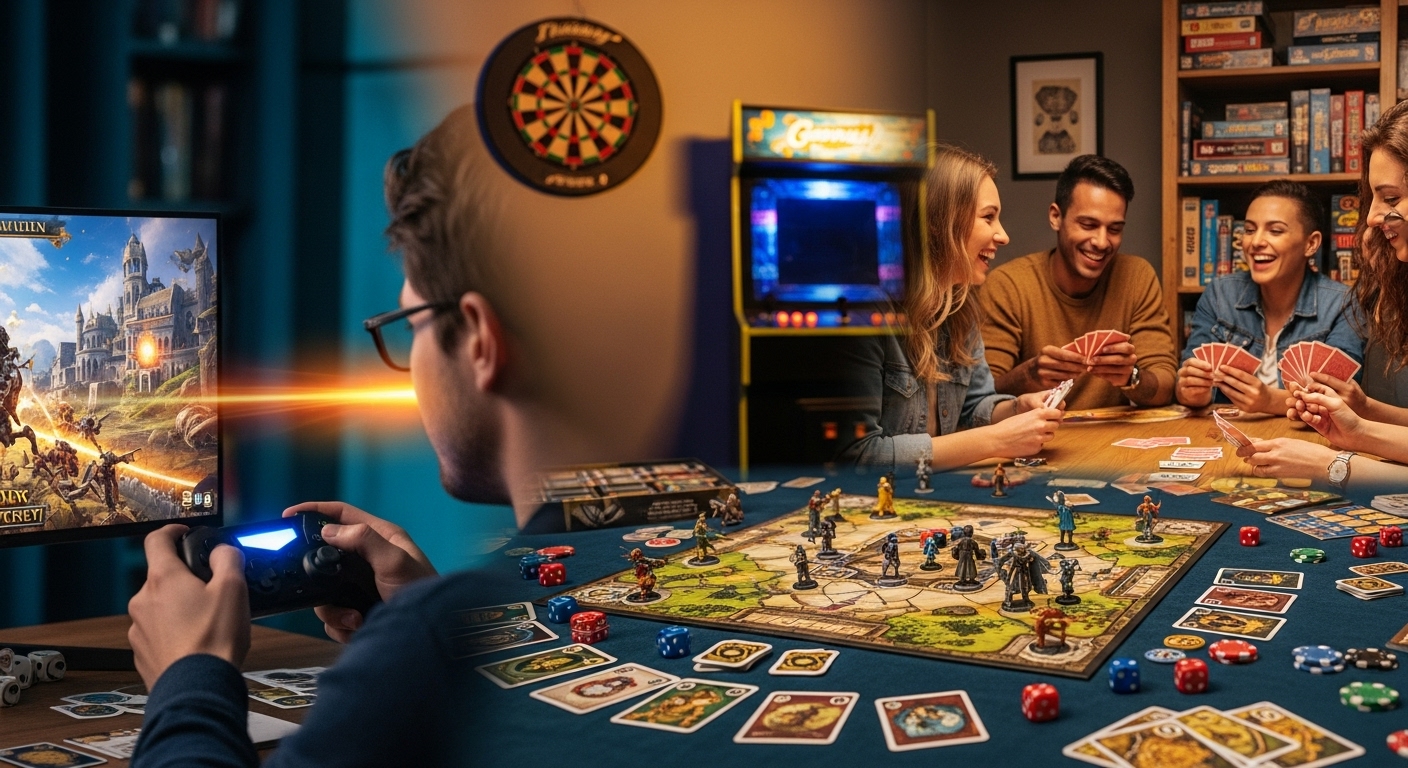
Gaming has become more than just a pastime. It’s a medium that shapes how we interact with technology, tells stories, and even brings people together. Over the years, video games have grown from simple pixelated graphics to deeply immersive worlds with intricate narratives and stunning visuals. The evolution of games has opened up new frontiers in entertainment, making it one of the most influential forms of media today. In this post, we will explore how games continue to captivate us, offering not only challenges and entertainment but also unique experiences that push the boundaries of imagination.
The Early Days: From Pixels to Playable Worlds
The journey of gaming began in the 1950s, but it wasn’t until the 1970s that games like Pong brought the concept of video games to the public. These early games were simple—minimal graphics, straightforward mechanics, and just one goal: to score points. Yet, they captivated millions of people, sparking interest in this new form of entertainment. Over the years, the arcade era flourished with games like Space Invaders and Pac-Man, laying the foundation for what gaming would become.
However, the true transformation began with the advent of home consoles. The Atari 2600 and later the Nintendo Entertainment System (NES) brought games directly into people’s living rooms, making it easier for everyone to get involved. Games began to evolve, becoming more complex with richer graphics and larger worlds. This era marked the beginning of video games as a major cultural force, paving the way for future innovations.
The Golden Age of 3D Gaming: A New Dimension
The 1990s were a turning point in the gaming industry. With the introduction of 3D graphics and powerful consoles like the PlayStation and Nintendo 64, video games transcended their two-dimensional roots. Games like Super Mario 64 and The Legend of Zelda: Ocarina of Time introduced players to expansive, open-world environments where exploration was as important as the gameplay itself.
This era also saw the rise of storytelling in games. Titles like Final Fantasy VII and Metal Gear Solid took narrative-driven experiences to new heights. These games weren’t just about getting to the next level—they were about living through the experiences of the characters, making choices, and feeling emotionally invested in the plot. The combination of visual depth and compelling storytelling laid the groundwork for the kind of gaming experiences we enjoy today.
The Social Shift: Gaming as a Shared Experience
In the early days, gaming was a solitary activity. However, the rise of the internet and online multiplayer games changed that. Games like Counter-Strike, World of Warcraft, and Halo 2 introduced players to the concept of playing against or with people from all around the world.
Online gaming created a new type of social space, where players could join teams, chat with friends, and compete for dominance in virtual worlds. This shift transformed gaming from an isolated experience to a communal one, with players coming together to create vibrant communities. The success of online multiplayer games gave birth to esports, a billion-dollar industry with professional teams, tournaments, and an ever-growing audience.
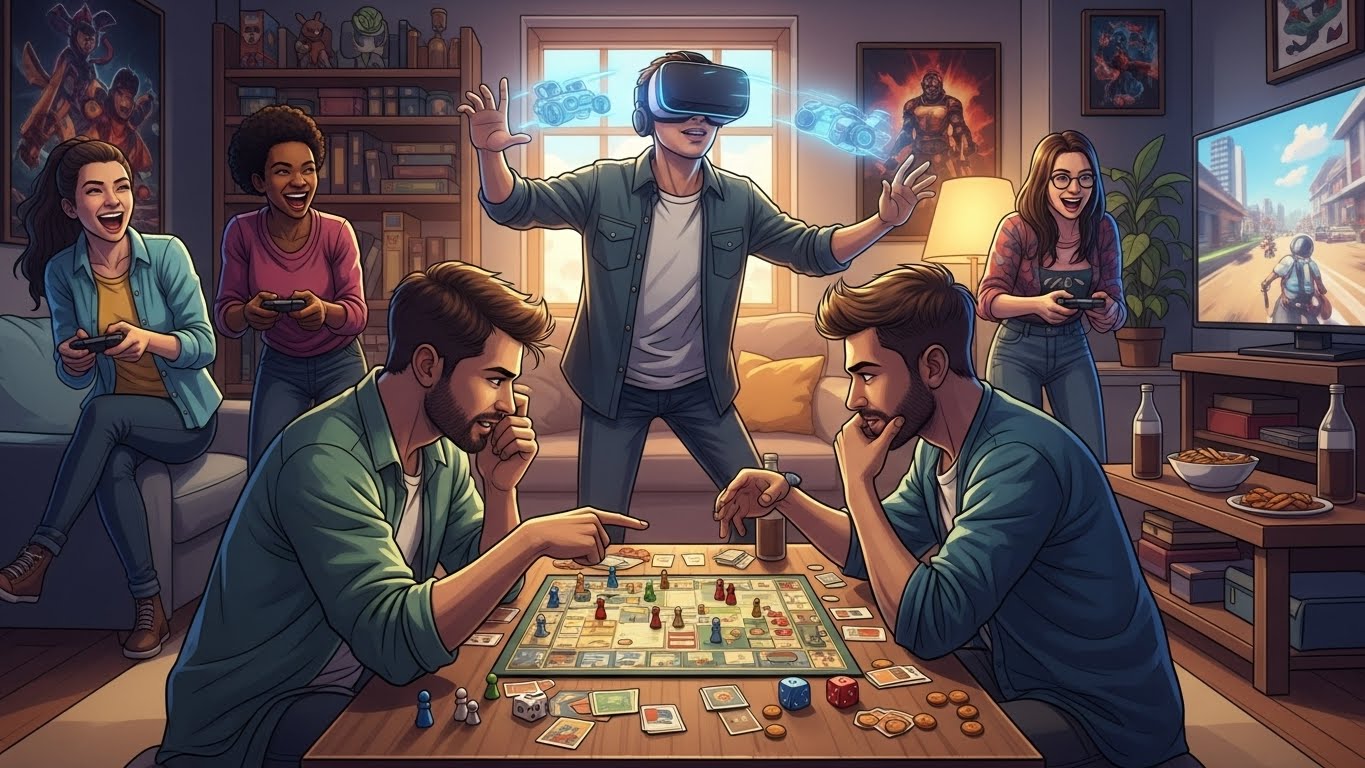
Gaming is no longer just a solo hobby—it’s an interconnected global phenomenon. The social aspects of gaming, from friends bonding over a shared mission to strangers teaming up to defeat powerful enemies, have made it a hub for interaction, collaboration, and even friendships.
Mobile Gaming: Entertainment in Your Pocket
In the 2010s, mobile gaming revolutionized the way we engage with games. With smartphones becoming ubiquitous, the gaming experience became more accessible than ever before. Games like Angry Birds, Candy Crush, and Pokémon Go reached millions of players who had never considered gaming before. These games were easy to play on-the-go, offering short, satisfying experiences that fit perfectly into a busy lifestyle.
Mobile gaming also paved the way for new genres, such as puzzle games, battle royales, and augmented reality games. With the success of games like Pokémon Go, augmented reality gaming became a global sensation. Players were encouraged to explore their physical surroundings, blending the digital and real worlds in ways that were once thought impossible. Mobile gaming not only brought new players into the fold but also introduced novel concepts of gameplay that continue to evolve today.
The Rise of Virtual and Augmented Reality: Stepping into the Game
As technology advances, we find ourselves on the cusp of the next big leap in gaming—virtual reality (VR) and augmented reality (AR). VR has already begun transforming the way we experience games. With devices like the Oculus Rift and PlayStation VR, players can step into fully immersive worlds where every move and gesture is part of the experience. Games like Beat Saber and Half-Life: Alyx offer new levels of interactivity, making the virtual world feel tangible and real.
Augmented reality, which overlays digital elements onto the real world, is also beginning to make waves. Pokémon Go may have been the first huge AR hit, but it’s just the beginning. As AR technology improves, we can expect more games that encourage players to explore their physical environments while interacting with digital elements. The possibilities for gaming are growing exponentially, and VR and AR are pushing the limits of what we thought was possible in a game.
Games as Art: Exploring Deeper Themes
Gaming today is far from just entertainment—it has evolved into a serious art form. Developers are increasingly using games to tackle complex themes, explore societal issues, and create profound emotional experiences. Titles like Journey, Celeste, and The Last of Us have shown that video games can be just as emotionally impactful as films or literature.
These games often explore themes such as isolation, mental health, and the human condition, providing players with unique, introspective experiences. The ability to interact with a game’s narrative, make choices, and directly influence the outcome creates a deep sense of connection to the story. Gaming has become a platform for artists to explore complex ideas in ways that are not only thought-provoking but also deeply personal for players.
The Future of Gaming: What’s Next?
As technology continues to advance, the future of gaming holds even more exciting possibilities. Cloud gaming, for instance, is expected to become a significant part of the industry in the coming years. With services like Google Stadia and Xbox Cloud Gaming, players will be able to stream games directly from the cloud, without needing high-end hardware. This could make gaming even more accessible, allowing anyone with an internet connection to experience high-quality games.
Additionally, the rise of artificial intelligence (AI) could lead to more dynamic, personalized gaming experiences. AI could allow for procedurally generated worlds, adaptive storylines, and smarter, more lifelike NPCs. The next generation of games could be uniquely tailored to each player, offering an experience that is never the same twice.
Conclusion: The Never-Ending Evolution of Gaming
Gaming has come a long way from its simple beginnings in the arcades, and it’s clear that its journey is far from over. With the advancements in technology, gaming continues to push the boundaries of what is possible, from stunning graphics and complex narratives to immersive virtual worlds and innovative gameplay. The future of gaming holds endless possibilities, from more accessible platforms to deeper, more meaningful storytelling.
Whether it’s the thrill of competition, the joy of exploration, or the satisfaction of a well-crafted narrative, games continue to captivate and inspire. They provide us with a space to dream, to connect, and to grow. And as we look to the future, one thing is certain: gaming will only continue to evolve, creating even more exciting experiences for generations to come.