
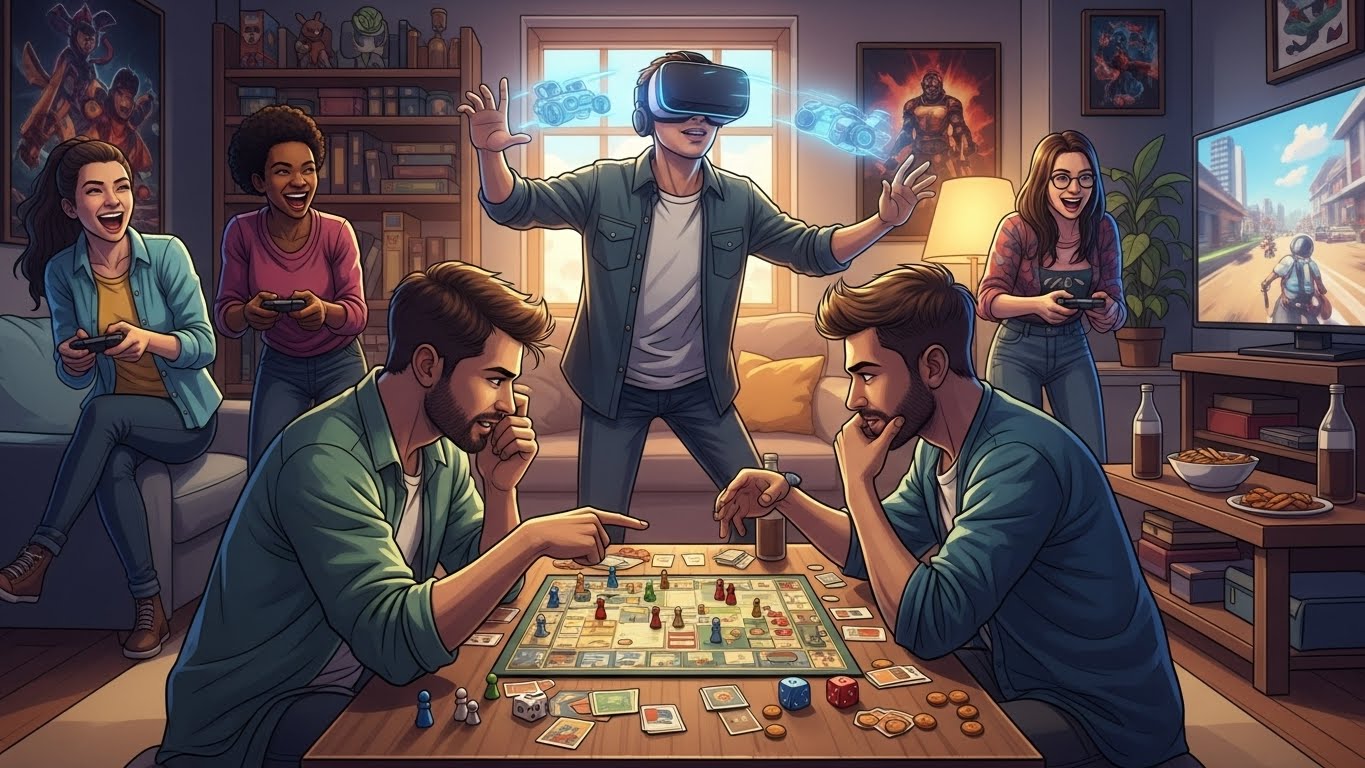
Games have been an essential part of human civilization for thousands of years. They are not only a source of entertainment but also a reflection of culture, creativity, and human psychology. From ancient board games to modern video games, the evolution of games demonstrates how play has grown alongside technology and society. Today, games have become a multi-billion-dollar industry, influencing social interaction, education, and even culture on a global scale.
The Historical Significance of Games
Games have existed in almost every culture, serving purposes beyond simple entertainment. Ancient societies used games for strategy training, social bonding, and teaching life skills. For instance, board games like Senet in Egypt or Go in China were more than just recreational activities; they symbolized intelligence, planning, and social hierarchy.
During the Middle Ages, games such as chess, checkers, and card games became popular, emphasizing strategy, logic, and skill. These traditional games laid the foundation for modern gaming by introducing structured rules, competitive play, and social interaction. Games were seen as a way to develop the mind and connect with others, principles that continue to influence contemporary gaming culture.
The Rise of Video Games
The introduction of video games in the 20th century marked a dramatic shift in the way humans play. Early electronic games like Pong and Space Invaders brought interactive entertainment into homes, creating a new form of leisure. Unlike traditional games, video games combine storytelling, art, and interactivity, offering immersive experiences that appeal to players of all ages.
As technology advanced, games evolved from simple 8-bit graphics to complex 3D worlds. Modern games provide rich narratives, realistic environments, and highly engaging gameplay. They are no longer just a form of amusement; video games are a medium of storytelling, creative expression, and cultural influence.
Different Types of Games
Games today come in various forms, each catering to different interests and skills. Traditional games like chess and card games emphasize strategy, logic, and mental acuity. These games have stood the test of time because they challenge the mind and encourage thoughtful competition.
Video games encompass a wide range of genres. Action and adventure games focus on skill, reflexes, and exploration. Role-playing games allow players to inhabit fictional worlds, make decisions, and shape their characters’ stories. Strategy games test planning and resource management, while sports and racing games simulate real-world experiences. Multiplayer online games create global communities, allowing players to collaborate, compete, and socialize in immersive digital worlds.
The Psychology of Gaming
Gaming is deeply connected to human psychology. Playing games provides challenges, rewards, and feedback, which stimulate the brain and release dopamine, the chemical associated with pleasure and motivation. The sense of achievement and progression in games keeps players engaged and encourages repeated play.
Gamification elements, such as points, levels, achievements, and leaderboards, enhance engagement by providing goals and rewards. Narrative-driven games appeal to emotions, creating immersive experiences that foster empathy, critical thinking, and problem-solving skills. Games can improve cognitive abilities, memory, and spatial reasoning, demonstrating that they are not only entertaining but also intellectually stimulating.
Social Impact of Games
Games have a significant social dimension. Traditional games often brought people together in physical spaces, fostering social bonds and cultural exchange. In the digital age, online multiplayer games have expanded these social interactions globally. Players can connect, collaborate, and compete with others from around the world, forming communities that transcend geographical boundaries.
The rise of esports has amplified the social and cultural importance of gaming. Competitive gaming tournaments attract millions of viewers, creating a shared sense of excitement and community. Streaming platforms allow players to share gameplay and strategies, creating interactive spaces where audiences can participate and engage with content in real time.
Technological Innovations Transforming Games
Technology has been the driving force behind the evolution of games. Early electronic games were limited in graphics and functionality, but advances in computing, graphics, and connectivity have created highly immersive experiences.
Virtual reality and augmented reality are redefining gameplay by creating interactive and immersive environments. VR allows players to fully step into game worlds, interacting with objects and characters in three dimensions. AR overlays digital elements onto the real world, blending reality with imagination in exciting new ways. Artificial intelligence enhances gameplay by creating adaptive challenges, smarter opponents, and dynamic storylines that respond to player choices.
Games as Cultural Storytelling
Games have evolved into a powerful storytelling medium. Narrative-driven games allow players to influence the story, creating unique experiences shaped by their decisions. Games explore complex themes, moral dilemmas, and cultural narratives, reflecting societal values and challenges.
Storytelling in games also fosters empathy and awareness. By putting players in the shoes of diverse characters and scenarios, games encourage understanding and perspective-taking. From epic fantasy worlds to realistic historical simulations, games provide a platform for cultural expression and engagement that goes beyond traditional media.
Economic Significance of the Gaming Industry
The gaming industry is a global economic powerhouse. It generates billions of dollars through game sales, in-game purchases, subscriptions, and merchandise. Beyond financial impact, it supports a wide range of professions including game design, software development, sound engineering, marketing, and professional gaming.
The rise of mobile gaming and digital distribution platforms has expanded accessibility, allowing millions of people worldwide to participate. Emerging markets in Asia, Latin America, and Africa are driving innovation and growth, highlighting the industry’s global reach and economic influence.
Educational and Therapeutic Benefits of Games
Games are increasingly recognized for their educational and therapeutic potential. Educational games teach concepts such as math, language, science, and history in engaging, interactive ways. Gamification in learning improves retention, motivation, and critical thinking.
Therapeutic applications of games include cognitive rehabilitation, stress relief, and emotional support. Virtual reality games are used in therapies for anxiety, phobias, and physical rehabilitation, providing safe environments for practice and skill development. Games demonstrate the potential to combine fun with education and personal growth.
Challenges in the Gaming Industry
Despite its growth, the gaming industry faces challenges. Gaming addiction and excessive screen time are significant concerns. Developers and players must balance engagement with well-being and mental health.
Regulatory and intellectual property issues are also critical. Developers must protect their creations while ensuring fair play and safety for users. Rapid technological advancements require continuous adaptation to keep games accessible, secure, and compatible across devices. Addressing these challenges is essential to ensure the industry remains sustainable and beneficial for players.
Future Trends in Gaming
The future of gaming promises greater innovation and immersion. Cloud gaming allows users to stream games without high-end hardware, making gaming more accessible. Artificial intelligence will continue to enhance personalization, adaptive challenges, and dynamic storylines.
Virtual reality and augmented reality are expected to become more mainstream, creating interactive and engaging experiences. Blockchain technology may impact games by enabling secure ownership of digital assets and in-game economies. Games will continue to evolve as a medium for entertainment, storytelling, education, and social interaction.
Conclusion: The Enduring Power of Games
Games are more than mere entertainment; they are a reflection of human creativity, culture, and technology. From ancient board games to modern video games, the evolution of games demonstrates their enduring impact on society.
The gaming industry continues to innovate, engaging players through immersive experiences, social interaction, and compelling storytelling. Games have become a medium that entertains, educates, and connects people across the globe. As technology advances and creativity expands, games will continue to shape culture, influence entertainment, and provide meaningful experiences for generations to come.
Games are a testament to human ingenuity and the timeless desire for play. They are a cultural phenomenon, a technological marvel, and a powerful tool for engagement, learning, and social connection. In the modern world, games are more than play—they are a digital revolution that continues to shape the way people experience life and interact with one another.