
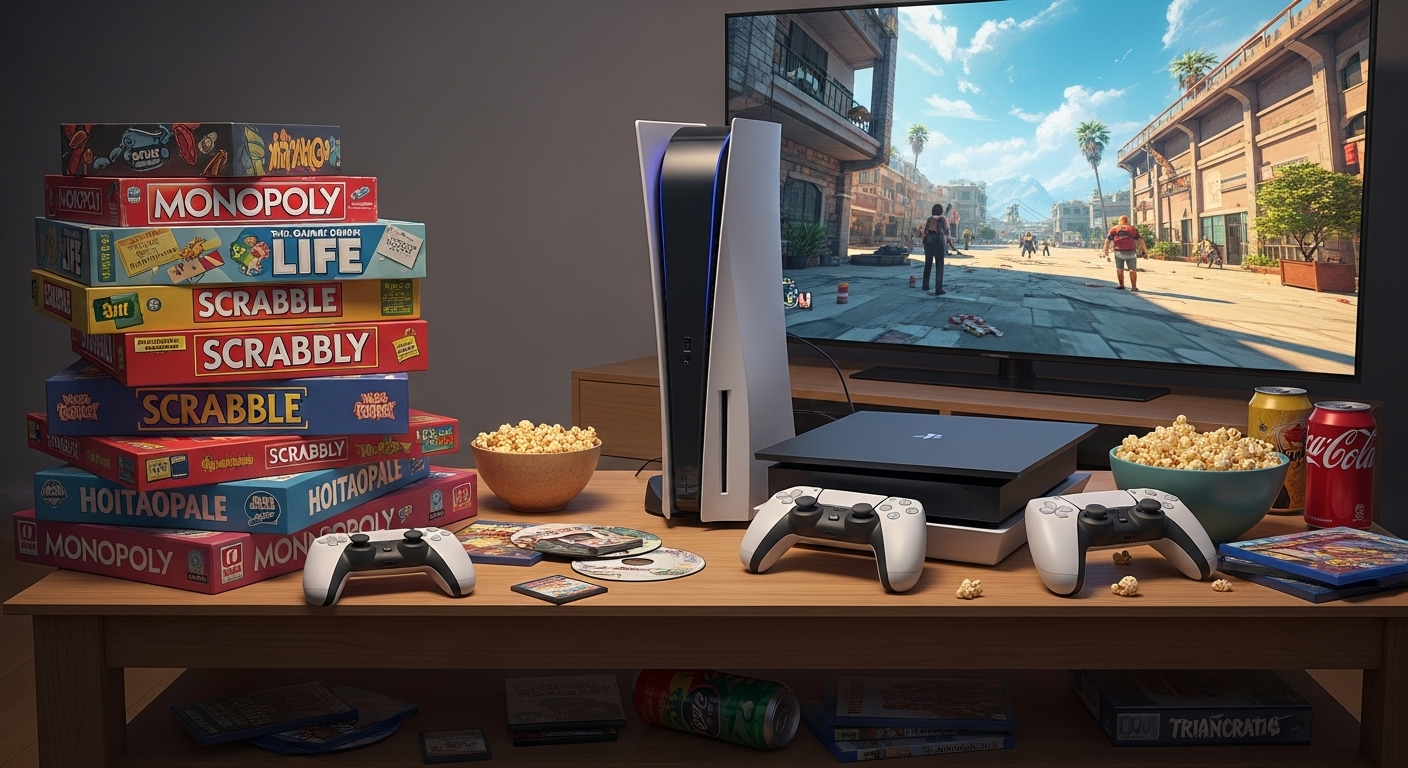
Games have been a part of human culture for thousands of years, providing both entertainment and educational value. What started as simple activities involving physical skill, chance, and social interaction has evolved into a multi-billion-dollar global industry, offering everything from video games to board games, mobile apps, and esports. In this blog post, we will explore the evolution of games, how they’ve shaped human culture, the impact of technology on gaming, and the future of interactive entertainment.
1. The Origins of Games: From Ancient Times to the Renaissance
The concept of games predates recorded history, with early forms of play emerging in ancient civilizations. Archaeological evidence suggests that games were played as early as 3,000 BC, with ancient Egyptians, Mesopotamians, and Chinese civilizations developing games for entertainment and strategy.
One of the oldest known board games is Senet, which dates back to around 3,100 BC and was played in ancient Egypt. The game involved moving pieces across a grid and was believed to have spiritual significance, often associated with the journey to the afterlife. Similarly, the Chinese developed the game of Go around 2,500 years ago. Go, a strategy board game, remains one of the most complex and enduring games in the world today.
During the Middle Ages and Renaissance, games continued to evolve, primarily as social pastimes for the elite. Chess, which originated in India in the 6th century and spread to Europe during the 9th century, became a game of skill and strategy, often used to teach military tactics. Other games like backgammon, dice games, and card games grew in popularity, forming the foundation for many modern games we enjoy today.
2. The Birth of Video Games: From Arcade Machines to Console Systems
The modern era of gaming truly began in the mid-20th century with the advent of video games. The first interactive video game, “Tennis for Two,” was created in 1958 by physicist William Higinbotham. However, it was the creation of “Pong” by Atari in 1972 that marked the beginning of the video game industry. Pong was a simple table-tennis simulation game, but it captured the public’s imagination and laid the groundwork for arcade gaming.
The success of arcade games like Pong led to the rise of video game arcades in the 1970s and 1980s. Games such as “Space Invaders,” “Pac-Man,” and “Donkey Kong” became household names, drawing players to arcades in droves. The excitement of high scores and the social aspect of arcade gaming contributed to its popularity. These early arcade games were relatively simple by today’s standards, but they had a massive cultural impact, shaping the direction of the gaming industry.
In the late 1970s and early 1980s, the first home gaming consoles appeared on the market. The Atari 2600, released in 1977, was one of the first successful home consoles, allowing players to enjoy video games in the comfort of their own homes. This period also saw the emergence of early game franchises like “Space Invaders” and “Asteroids,” which would go on to become iconic names in the gaming world.
3. The Golden Age of Video Games: 8-Bit and 16-Bit Consoles
The 1980s and 1990s are often referred to as the “golden age” of gaming, as the industry experienced rapid growth and technological advancements. The introduction of 8-bit consoles, such as the Nintendo Entertainment System (NES) in 1985, revolutionized gaming. The NES brought games like “Super Mario Bros.” and “The Legend of Zelda,” which are still beloved today. These titles introduced players to expansive worlds, memorable characters, and gameplay mechanics that would shape the future of video games.
The rise of 16-bit consoles, such as the Sega Genesis and Super Nintendo Entertainment System (SNES), brought even more sophisticated graphics and sound, taking gaming to the next level. Classic games like “Sonic the Hedgehog,” “Super Mario World,” and “Street Fighter II” pushed the boundaries of what games could offer, introducing vibrant worlds and fast-paced action that kept players coming back for more.
This era also marked the beginning of game franchises that are still relevant today, with franchises like “Final Fantasy,” “Metroid,” and “Mega Man” becoming household names. In addition to console games, personal computers also played a significant role in the development of gaming, with iconic PC games like “SimCity,” “Doom,” and “Warcraft” expanding the scope of interactive entertainment.
4. The Rise of 3D Gaming: The 32-Bit and 64-Bit Revolution
As technology continued to advance, so did the complexity of video games. The shift from 2D to 3D gaming in the late 1990s was a monumental leap forward. Consoles like the Sony PlayStation, released in 1994, and the Nintendo 64, released in 1996, featured 3D graphics that opened up new possibilities for game developers and players alike.
The PlayStation introduced groundbreaking 3D games such as “Final Fantasy VII,” “Gran Turismo,” and “Metal Gear Solid.” The ability to explore fully realized three-dimensional environments and experience complex, immersive gameplay was a game-changer. The Nintendo 64 also pushed the boundaries with games like “Super Mario 64” and “The Legend of Zelda: Ocarina of Time,” both of which set new standards for 3D game design and storytelling.
In this era, developers started to focus more on creating open-world experiences, where players could explore vast environments without rigid level boundaries. This shift laid the groundwork for the development of the modern open-world games that dominate the gaming industry today.
5. The Rise of Online Gaming: Connecting Players Around the World
By the early 2000s, the internet had become a central part of everyday life, and gaming quickly adapted to this new digital landscape. Online multiplayer gaming allowed players to connect with others around the world, creating communities and transforming gaming into a more social activity.
One of the most significant developments in online gaming was the rise of massively multiplayer online role-playing games (MMORPGs). Games like “World of Warcraft” (2004) and “EVE Online” (2003) allowed players to create characters, form guilds, and explore massive digital worlds together. These games became cultural phenomena, offering experiences that blended social interaction with immersive fantasy worlds.
In addition to MMORPGs, online competitive gaming and esports started to take off. Games like “Counter-Strike,” “League of Legends,” and “Dota 2” introduced competitive multiplayer gameplay that allowed players to compete in tournaments for cash prizes, turning professional gaming into a legitimate career for many. The growth of esports has been nothing short of remarkable, with millions of viewers tuning in to watch high-level gaming competitions and tournaments.
6. Mobile Gaming: The New Frontier of Accessible Entertainment
In the late 2000s, the rise of smartphones revolutionized the gaming industry once again. Mobile gaming became one of the most accessible and widespread forms of entertainment, allowing players to enjoy games anytime and anywhere. Titles like “Angry Birds,” “Candy Crush,” and “Clash of Clans” brought gaming to the masses, appealing to a wide demographic that included casual gamers who may not have previously been interested in video games.
Mobile gaming also introduced the concept of “freemium” games, where players could download games for free but had the option to make in-app purchases to enhance their experience. This model has proved immensely successful and has led to the development of countless mobile games that generate billions of dollars annually.
The rise of mobile gaming has made gaming more inclusive, allowing people to enjoy interactive entertainment on a global scale. Whether it’s quick puzzle games, strategy games, or massive online multiplayer experiences, mobile devices have democratized gaming in ways that were previously unthinkable.
7. Virtual Reality and Augmented Reality: The Next Frontier
As gaming technology continues to evolve, the next big leap forward seems to be in the realms of virtual reality (VR) and augmented reality (AR). VR gaming immerses players in a completely virtual environment, allowing them to interact with the game world in ways that traditional gaming platforms cannot match. Devices like the Oculus Rift, HTC Vive, and PlayStation VR are pushing the boundaries of what’s possible, offering truly immersive experiences.
Games like “Beat Saber,” “Half-Life: Alyx,” and “Rec Room” have demonstrated the potential of VR, giving players the ability to physically move within a game world, solve puzzles, and engage in combat in ways that traditional controllers simply can’t replicate. AR games, such as “Pokémon GO,” have also become immensely popular by blending the virtual and real worlds, encouraging players to get outside and explore their surroundings.
As VR and AR technology continues to improve, it is expected that gaming will become even more interactive and immersive, offering players new ways to experience entertainment.
8. The Future of Gaming: Trends and Innovations to Watch
The future of gaming looks brighter than ever, with new trends and innovations shaping the industry in exciting ways. Cloud gaming, where players can stream games directly to their devices without the need for expensive hardware, is set to become a major trend. Platforms like Google Stadia and Xbox Cloud Gaming are paving the way for this shift, offering high-quality gaming experiences with minimal hardware requirements.
Artificial intelligence (AI) is also playing an increasingly important role in gaming, from creating more dynamic and challenging enemies to enhancing storytelling and procedural content generation. The use of AI in gaming has the potential to create more personalized and responsive experiences for players, making games feel more alive and reactive.