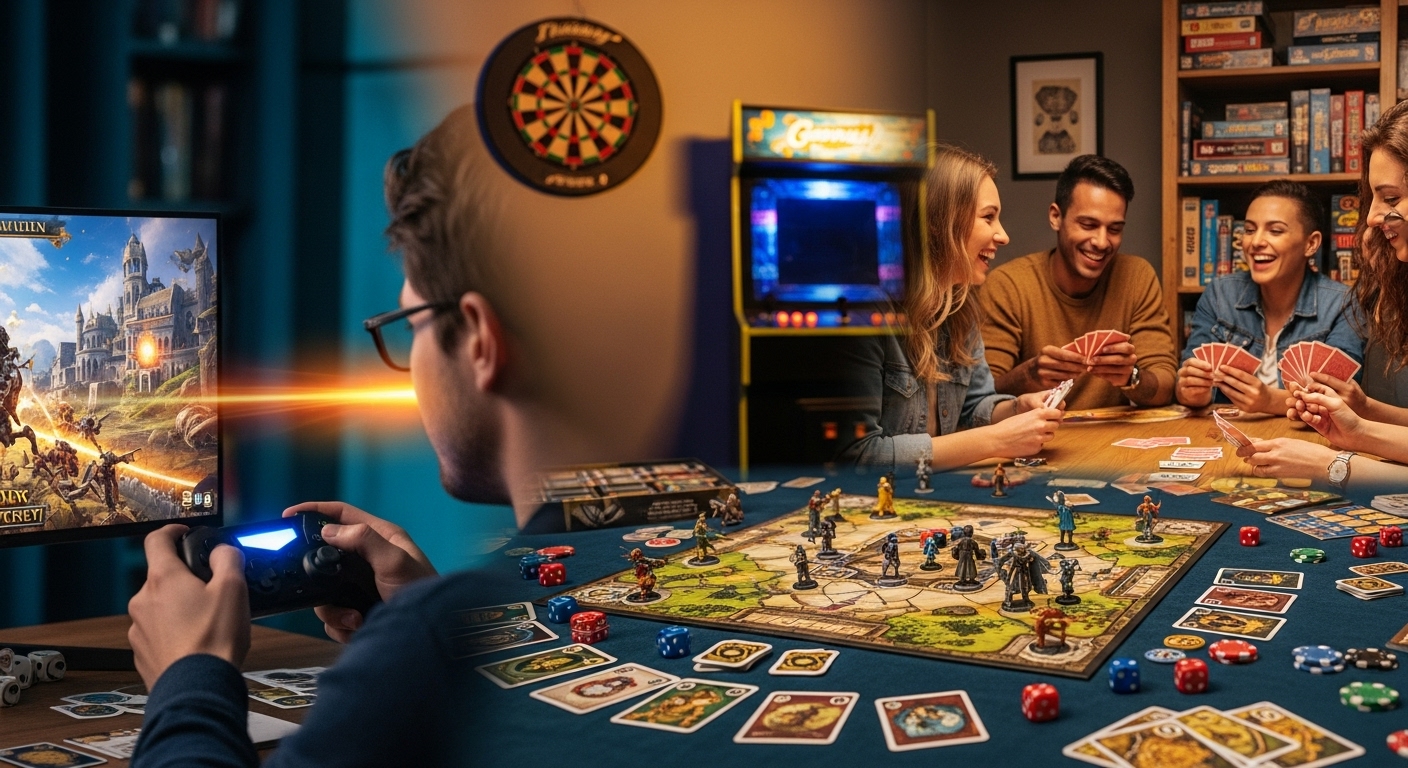

The world of games has undergone a remarkable transformation over the years, evolving from simple forms of entertainment to complex, immersive experiences that captivate millions of players worldwide. Whether you enjoy traditional board games, classic video games, or the latest virtual reality (VR) experiences, gaming has something for everyone. In this blog post, we will take a deep dive into the evolution of games, exploring their impact on culture, technology, and entertainment, and how the gaming industry continues to shape the future of interactive entertainment.
The Origins of Games: A Journey Through Time
Games have existed in various forms for centuries, far longer than most people realize. Ancient civilizations played games as a form of entertainment, social interaction, and even education. The origins of many modern games can be traced back to early examples of human creativity.
1. Board Games: The Birth of Structured Play
Board games have long been a staple of entertainment in cultures around the world. Games like chess, backgammon, and Go date back thousands of years. Chess, for example, originated in India around the 6th century and spread across the world through trade and conquest. Backgammon can be traced to Mesopotamia, while Go, a strategy game from China, has been played for over 2,500 years.
Board games offered a structured form of play and intellectual challenge, and many of them are still popular today. Modern board games, from Monopoly to Settlers of Catan, build on these ancient roots, creating new experiences that continue to bring people together.
2. Card Games: A World of Possibilities
Card games also have an ancient heritage. Playing cards were invented in China during the Tang Dynasty (618–907 AD) and spread to the Middle East and Europe by the 14th century. The simplicity and versatility of card games have made them a timeless form of entertainment.
From traditional games like poker and bridge to newer variations like Magic: The Gathering and Yu-Gi-Oh!, card games provide endless opportunities for strategy, luck, and social interaction. The rise of online card games, particularly in the 21st century, has brought new life to card-playing communities, connecting players from all corners of the globe.
The Emergence of Video Games: A New Era of Entertainment
The 20th century marked a major turning point in the world of games, with the advent of video games. The introduction of the first home video game consoles and arcade machines in the 1970s and 1980s opened up a new frontier of gaming possibilities. Video games rapidly became a dominant force in entertainment, with gaming platforms evolving from simple, pixelated games to fully immersive virtual worlds.
1. The Birth of Video Games: Pong and the Arcade Revolution
In 1972, Atari released Pong, a simple two-player ping-pong game that became the first commercially successful video game. Pong laid the foundation for the arcade boom of the 1970s and 1980s, as more and more arcades popped up in cities around the world. Gamers flocked to these arcade machines to experience new, high-score-driven gameplay that was unlike anything seen before.
By the early 1980s, arcade games like Pac-Man, Donkey Kong, and Space Invaders had become cultural icons, and the golden age of arcade gaming was in full swing. These early video games were often simple in design but offered fast-paced, addictive gameplay that kept players coming back for more.
2. Home Consoles and the Rise of Personal Gaming
The 1980s also saw the advent of home gaming consoles, with systems like the Nintendo Entertainment System (NES) and Sega Genesis bringing video gaming into living rooms around the world. Home consoles made video games more accessible to a broader audience, allowing players to enjoy gaming experiences in the comfort of their own homes.
The 1990s witnessed the explosion of 3D gaming with the release of consoles like the Sony PlayStation and Nintendo 64. These consoles introduced fully realized 3D environments, allowing games to take on a more realistic and immersive quality. Games like Super Mario 64, The Legend of Zelda: Ocarina of Time, and Final Fantasy VII became landmarks in gaming history, setting new standards for storytelling, graphics, and gameplay mechanics.
3. The Rise of Online Gaming and Multiplayer Experiences
As internet connectivity improved in the late 1990s and early 2000s, online gaming began to emerge as a new frontier. Games like Warcraft III, Quake, and Counter-Strike introduced multiplayer modes that allowed players to compete against or cooperate with others in real time. This marked the beginning of a new era of gaming that emphasized social interaction and community building.
By the mid-2000s, massively multiplayer online role-playing games (MMORPGs) like World of Warcraft were redefining how people thought about online play. These games allowed players to enter vast virtual worlds, interact with other players, complete quests, and engage in large-scale battles. The rise of online gaming changed the gaming landscape forever, as the emphasis shifted from single-player experiences to online communities and shared worlds.
The Evolution of Game Genres: From Platformers to Open Worlds
The gaming industry has grown to include a wide variety of genres, each offering a unique experience. The progression of technology and gaming hardware has allowed developers to push the boundaries of what is possible in terms of game design and storytelling. Here are a few major genres that have shaped the gaming landscape.
1. Platformers: A Classic Foundation
Platformers, a genre that originated in the 1980s with games like Super Mario Bros., have remained one of the most iconic and beloved types of video games. These games typically involve players navigating a character through a series of platforms while avoiding obstacles and enemies.
The Super Mario series, in particular, has become synonymous with the platforming genre. Over the years, the genre has evolved to incorporate new mechanics, such as puzzle-solving elements in games like Limbo and Celeste or 3D exploration in games like Super Mario Odyssey. Despite the genre’s simple origins, platformers remain an enduring staple of the gaming world.
2. Role-Playing Games (RPGs): Immersive Worlds and Complex Narratives
RPGs have grown from early text-based adventures to some of the most expansive and intricate games ever created. Games like The Elder Scrolls V: Skyrim, Final Fantasy, and The Witcher 3: Wild Hunt offer players the opportunity to explore richly detailed worlds, engage in epic quests, and develop their characters through decision-making and progression systems.
RPGs are particularly known for their deep narratives and player choice. In many of these games, players’ decisions can have a lasting impact on the story, encouraging replayability and providing a sense of agency in the game world.
3. First-Person Shooters (FPS): Action at Its Best
The FPS genre has dominated the gaming industry for decades, offering fast-paced action, strategic gameplay, and immersive worlds. Starting with early games like Doom and Wolfenstein 3D, FPS games have evolved significantly in terms of graphics, multiplayer modes, and storytelling.
Games like Call of Duty, Halo, and Overwatch have become cultural phenomena, with large communities and competitive esports scenes. FPS games are known for their intense action, reflex-based gameplay, and teamwork, making them a favorite among both casual and hardcore gamers.
4. Open-World Games: Endless Exploration
Open-world games have emerged as one of the most popular genres of modern gaming. These games allow players to explore vast, open environments with minimal restrictions, offering the freedom to engage with the world in a variety of ways. Games like Grand Theft Auto V, Red Dead Redemption 2, and Minecraft have set the standard for open-world design, giving players the ability to immerse themselves in a living, breathing world.
The appeal of open-world games lies in their freedom. Players can choose their path, engage in side activities, or pursue the main story at their own pace. These games often feature dynamic weather systems, day-night cycles, and rich ecosystems that make the virtual world feel alive.
The Future of Games: Virtual Reality, Artificial Intelligence, and Beyond
As technology continues to advance, the future of gaming looks incredibly exciting. Virtual reality (VR), augmented reality (AR), and artificial intelligence (AI) are all expected to play significant roles in the next generation of gaming.
1. Virtual Reality: Immersing Players in New Worlds
VR technology has the potential to revolutionize the gaming industry by providing an even more immersive experience. Games like Beat Saber and Half-Life: Alyx have shown the promise of VR gaming, allowing players to physically interact with virtual environments in ways that traditional gaming setups cannot replicate.
The future of VR gaming holds immense potential, with developers exploring new ways to make virtual worlds more interactive and lifelike. As VR hardware becomes more affordable and accessible, it’s likely that VR gaming will become more mainstream, offering players a truly next-level experience.
2. Artificial Intelligence: Smarter NPCs and Personalized Experiences
AI is already being used in games to create smarter non-playable characters (NPCs), more dynamic storytelling, and personalized experiences. In the future, AI could lead to even more advanced games, where characters respond to players’ actions in realistic ways and the world adapts based on individual choices.