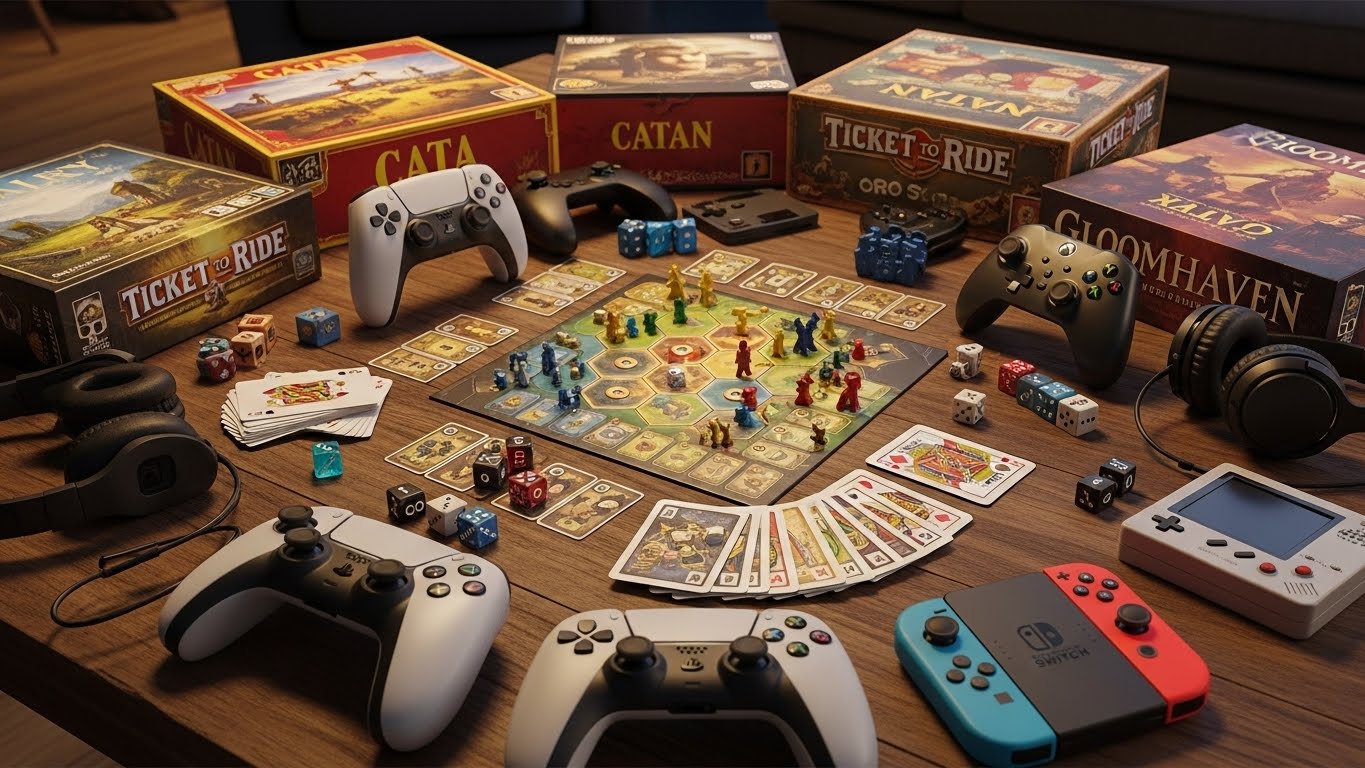

Gaming has come a long way from the days of basic pixelated graphics and simple gameplay mechanics. What once started as a niche hobby has now become one of the largest and most diverse industries in the world, with a global audience that spans all ages and backgrounds. Video games have evolved into a powerful form of entertainment, education, and even social interaction. From the rise of mobile gaming to the immersive experiences offered by virtual reality, the gaming world is constantly pushing the boundaries of what is possible.
This blog post explores the incredible evolution of gaming, its current landscape, and where it is headed in the future. Whether you’re an avid gamer or someone just curious about the medium, there’s no denying that gaming is a vital part of modern culture.
The Birth of Video Games: From Arcades to Consoles
The story of video games begins in the 1950s and 1960s, with the creation of simple computer programs designed for entertainment. Early games like “Tennis for Two” and “Spacewar!” were the precursors to the gaming revolution that would follow. However, it wasn’t until the early 1970s that video games began to find their place in mainstream entertainment. The release of “Pong” in 1972, one of the first arcade games, marked the beginning of a new era in interactive entertainment.
Arcades became the cultural hubs of the 1980s, with games like “Pac-Man,” “Donkey Kong,” and “Space Invaders” drawing huge crowds. During this time, the idea of gaming as a popular, widespread activity started to take hold. While arcades remained dominant throughout the decade, the late 1980s and early 1990s saw the emergence of home consoles like the Nintendo Entertainment System (NES) and Sega Genesis, which brought gaming into people’s living rooms.
These consoles changed the gaming landscape forever, making video games more accessible and affordable for the average person. From there, the gaming industry grew rapidly, paving the way for more complex gameplay, sophisticated graphics, and larger-scale gaming experiences.
The Rise of the Gaming Industry: A Multibillion-Dollar Empire
As technology continued to improve, so did the capabilities of video games. The 1990s and early 2000s saw the rise of 3D graphics, more intricate storylines, and expanded gameplay mechanics. Franchises like “Super Mario,” “The Legend of Zelda,” “Final Fantasy,” and “Halo” became iconic, shaping the very identity of modern gaming.
By the mid-2000s, the gaming industry had transformed into a multi-billion-dollar business. Gaming consoles such as the PlayStation 2, Xbox, and later the PlayStation 3 and Xbox 360, sold millions of units worldwide. At the same time, the personal computer (PC) gaming scene was flourishing, with popular titles like “World of Warcraft” and “The Sims” attracting massive online communities.
Gaming also began to diversify during this period. The rise of online multiplayer games brought social elements into play, as players could now compete or cooperate with others across the globe. Online platforms like Steam allowed gamers to download and play games directly on their PCs, marking a shift toward digital distribution.
With the explosion of smartphones and mobile technology, the advent of mobile gaming further expanded the industry. Games like “Angry Birds,” “Candy Crush,” and “Pokémon GO” reached audiences beyond traditional gamers, introducing a whole new demographic to the joys of gaming.
The Role of Storytelling in Gaming
One of the most notable advancements in gaming over the years has been the evolution of storytelling. Early games often focused on simple gameplay mechanics, with little or no narrative beyond the gameplay itself. However, as technology improved and the industry matured, developers began to experiment with more complex, emotionally-driven narratives.
Franchises like “Final Fantasy,” “The Elder Scrolls,” and “The Last of Us” revolutionized storytelling in games, showing that video games could be a powerful medium for storytelling. These games combined cinematic storytelling with interactive gameplay, allowing players to experience and influence the narrative in a way that was unprecedented.
This trend continues today, with games like “Red Dead Redemption 2” and “The Witcher 3: Wild Hunt” offering deeply immersive, story-driven experiences. In fact, many modern video games are now considered works of art, blending cinematic techniques with gameplay to tell stories that rival those in movies and television.
What makes gaming as a storytelling medium unique is the level of player agency. In many games, players don’t just watch a story unfold; they are active participants in it. This interactivity adds an extra layer of emotional investment, as players’ decisions can affect the outcome of the narrative.
The Rise of Esports and Competitive Gaming
As the popularity of gaming grew, so did the demand for competitive play. What started as friendly tournaments in arcades and college dorms has now evolved into a global industry. Esports, or electronic sports, refers to organized, multiplayer video game competitions, often involving professional players and teams.
The rise of esports has been nothing short of remarkable. Games like “League of Legends,” “Dota 2,” “Overwatch,” and “Counter-Strike” have all become staples of the esports scene. Esports events are now broadcast on major platforms like Twitch, YouTube, and even traditional TV networks, drawing millions of viewers from around the world.
Top esports athletes can earn significant amounts of money through sponsorships, tournament prizes, and streaming. Esports has also become a career path for many young players, with dedicated leagues and training facilities. What was once considered a niche activity has now grown into a global entertainment phenomenon, attracting massive sponsorships from companies like Coca-Cola, Intel, and Nike.
Esports’ growth has also influenced traditional sports. Many professional sports teams now have their own esports divisions, with athletes competing in video game leagues as well as real-life sports. This crossover is a testament to how gaming has evolved into a mainstream form of entertainment that resonates with fans across different mediums.
Gaming and Virtual Reality: The Future of Immersion
The next frontier in gaming is virtual reality (VR). While VR gaming has been around for some time, recent advancements in hardware and software have made it more accessible and realistic than ever before. VR headsets like the Oculus Rift, HTC Vive, and PlayStation VR offer players the ability to step into fully immersive digital worlds, where they can interact with environments and characters in ways that were once the stuff of science fiction.
VR gaming allows for a level of immersion that traditional gaming platforms simply can’t match. Players can physically move around within the game world, engage with objects, and experience a sense of presence that makes them feel as if they are truly part of the game. Whether it’s exploring alien worlds in “No Man’s Sky” or fighting zombies in “Resident Evil 7,” VR games offer an experience that is far more visceral and engaging.
AR (Augmented Reality) is also beginning to make waves in the gaming world. Unlike VR, which replaces the real world with a digital one, AR overlays digital elements onto the real world. Games like “Pokémon GO” have already shown the potential of AR, allowing players to catch virtual creatures in real-world locations. As AR technology advances, we can expect to see more games that blend the digital and physical worlds in exciting new ways.
Both VR and AR have the potential to revolutionize the gaming industry, offering new forms of interaction and immersion that will undoubtedly shape the future of entertainment.
The Impact of Gaming on Society: More Than Just Fun
While gaming has always been seen primarily as a form of entertainment, its impact on society goes far beyond that. Video games have been shown to improve cognitive skills such as problem-solving, hand-eye coordination, and multitasking. Certain types of games, such as puzzle games and strategy games, can even help sharpen players’ critical thinking skills.
Gaming has also become a platform for education. Many educators are using video games to teach subjects like history, math, and science. Games like “Minecraft” are being used in classrooms to teach everything from architecture to teamwork, while games like “Kerbal Space Program” offer students a fun way to learn about physics and space exploration.
Furthermore, video games have become a space for social interaction. Online multiplayer games allow people to connect with others around the world, form friendships, and collaborate on shared goals. This social aspect of gaming has led to the rise of gaming communities and streaming platforms where players can watch and interact with others.
Video games have also become a way for people to express themselves creatively. Games like “Super Mario Maker” and “LittleBigPlanet” allow players to design their own levels and share them with the world, while platforms like Twitch and YouTube give gamers the opportunity to share their experiences and build online communities.
Conclusion: Gaming’s Unstoppable Growth
From humble beginnings in arcades to massive global tournaments and virtual worlds, gaming has evolved into a cultural force that continues to grow and shape the way we live, work, and play. As technology advances, the possibilities for gaming are limitless, with new forms of interaction, storytelling, and immersion on the horizon.
Whether you’re a casual mobile gamer or a competitive esports athlete, the world of gaming offers something for everyone. As the industry continues to innovate and push the boundaries of what is possible, one thing is clear: gaming is here to stay, and its influence on our lives will only continue to grow.