
Introduction
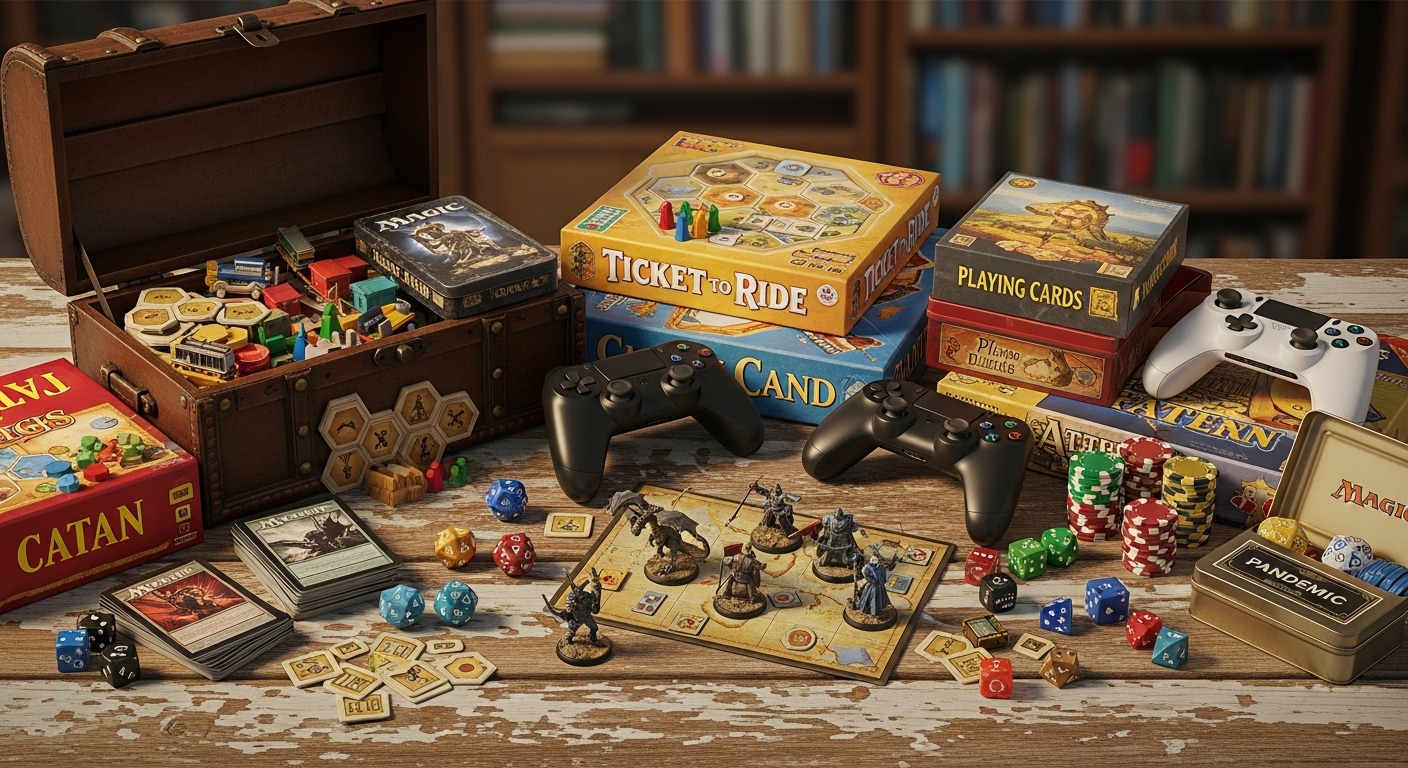
Games have always been part of human life. Long before technology, people played games with stones, sticks, or simple boards drawn on the ground. They played for fun, for learning, for bonding, and sometimes even for survival. The concept of gaming is not limited to just entertainment—it’s deeply tied to culture, history, and psychology. Today, as we live in a digital era filled with video games, esports, and virtual worlds, it’s fascinating to see how far games have evolved and how much they continue to shape our society.
The Ancient Origins of Games
If we travel back in time thousands of years, we would find that even early civilizations engaged in games. The Royal Game of Ur, discovered in Mesopotamia, is one of the oldest known board games, believed to date back to around 2600 BC. Similarly, Senet from ancient Egypt was not only a pastime but also a spiritual journey representing the afterlife. In China, Go and Xiangqi (Chinese chess) were not just strategic games but ways to cultivate mental discipline and philosophical thinking. Games were more than amusement—they were reflections of human creativity and cultural identity.
The Role of Games in Society
Throughout history, games have served various purposes beyond fun. They’ve been tools for education, physical training, and social connection. In ancient Greece, athletic games like the Olympics were considered essential for both body and mind. In medieval Europe, knights participated in jousting tournaments to demonstrate bravery and skill. In indigenous cultures, traditional games often carried spiritual or communal meanings. Even today, games play a critical role in society by fostering teamwork, problem-solving, and emotional resilience. They are mirrors that reflect our desires, fears, and imagination.
The Birth of Modern Games
The 19th and early 20th centuries brought about a transformation in gaming. Industrialization and urbanization gave people more leisure time, and board games became a popular household activity. Monopoly, Scrabble, and Chess evolved into cultural icons, bridging generations and bringing families together around tables. The design and commercialization of these games showed how entertainment could also become an industry. Around the same time, sports like soccer, basketball, and baseball were formalized with standardized rules, allowing them to spread globally and create new communities of fans and players.
The Digital Revolution in Gaming
Then came the computer. The mid-20th century saw scientists and engineers experimenting with early digital games. In 1958, a physicist named William Higinbotham created “Tennis for Two,” one of the first electronic games. By the 1970s, arcade machines began to appear, and soon games like Pong, Space Invaders, and Pac-Man became household names. What started as a technological curiosity turned into a global phenomenon. Home consoles from companies like Atari, Nintendo, and Sega transformed living rooms into playgrounds. Each decade brought new innovations, better graphics, and deeper storytelling, pulling players into experiences that felt increasingly real.
The Rise of Video Game Culture
By the 1990s, gaming had become mainstream. It was no longer just for children—it was an art form, a competitive field, and a social network before social media even existed. Role-playing games like Final Fantasy and The Legend of Zelda allowed players to explore vast fantasy worlds. Fighting games like Street Fighter and Mortal Kombat created rivalries and tournaments. Shooters like Doom and GoldenEye introduced adrenaline and precision to gaming. The internet age then connected players across continents, leading to the birth of online multiplayer gaming. Communities began to form around games, forums, and fan art, marking the beginning of gaming as culture rather than mere pastime.
The Psychology of Playing
What makes games so captivating? Psychologists have studied gaming behavior for decades, discovering that games satisfy several human needs. They provide goals and feedback, giving a sense of progress and accomplishment. They challenge us just enough to stay engaged without overwhelming us—a concept known as “flow.” They also offer escapism, allowing players to explore identities, roles, and worlds beyond their everyday lives. Furthermore, multiplayer games feed our social instincts by creating communities, alliances, and even friendships that can span years. In essence, games tap into the human need to learn, connect, and play.
The Impact of Technology on Game Design
Technology has always driven the evolution of games. The jump from 8-bit graphics to photorealistic environments is one of the most impressive transformations in entertainment history. Today’s games use motion capture, artificial intelligence, and virtual reality to create experiences that blur the line between reality and fiction. Players no longer just control characters—they inhabit them. Game developers can now build vast open worlds with ecosystems, weather systems, and complex moral choices. Every technological leap opens new creative doors, allowing designers to tell stories and build interactions that would have been impossible just a decade ago.
Esports and the New Age of Competition
Just as physical sports dominated the 20th century, digital sports—or esports—are defining the 21st. What began as friendly competitions in arcades has turned into a global industry worth billions. Games like League of Legends, Dota 2, and Counter-Strike attract millions of viewers to tournaments watched live in arenas and streamed online to global audiences. Professional players train rigorously, often under coaching teams, just like traditional athletes. The rise of esports has changed perceptions of gaming from a hobby to a legitimate career path. It has also built bridges between cultures, as teams from all over the world compete on equal virtual grounds.
The Social Side of Gaming
Games are no longer isolated experiences. Multiplayer and online gaming have transformed how people interact. From voice chats to massive online communities, players form friendships, rivalries, and collaborations. Games like Minecraft, Fortnite, and Roblox allow players to build, share, and create together, making gaming as much a social platform as a form of entertainment. The sense of belonging that players feel in gaming communities can be powerful, especially for those who might struggle with social connection in real life. Online gaming, when approached healthily, can foster empathy, teamwork, and creativity on a global scale.
Mobile Gaming and Accessibility
The smartphone revolution democratized gaming. Suddenly, anyone with a phone could be a gamer. Titles like Angry Birds, Candy Crush, and Clash of Clans showed that games didn’t need consoles or high-end PCs to reach millions. Mobile games blend convenience with accessibility—they fit into our pockets and daily routines. Moreover, mobile gaming introduced new demographics to the world of play, including people who had never owned a console. It also sparked innovation in game design, emphasizing short sessions, intuitive interfaces, and social sharing features.
The Art and Storytelling of Games
Games have become one of the most dynamic storytelling mediums of our time. Unlike films or books, games allow players to participate in the narrative, influencing outcomes and shaping emotional experiences. Story-driven games like The Last of Us, Red Dead Redemption, and Journey have proven that games can evoke deep emotional responses. Visual design, music, and dialogue come together to create experiences that rival any art form. Many developers now consider themselves not just programmers, but artists, crafting interactive masterpieces that explore love, loss, identity, and morality.
The Economic Power of the Gaming Industry
The gaming industry has grown beyond anyone’s expectations. It now surpasses movies and music in total revenue. With billions of players around the world, the business side of gaming is thriving. Game development studios employ artists, designers, musicians, writers, and engineers. Streaming platforms allow players to earn money through gameplay, sponsorships, and fan donations. Indie developers can publish their creations directly to players without big publishers, giving rise to a wave of innovation and diversity in gaming. This vast ecosystem supports a global workforce and drives technological advancement across hardware and software industries.
The Dark Side of Games
While games offer countless benefits, they are not without challenges. Issues like addiction, toxicity in online communities, and excessive monetization have drawn criticism. Some players spend unhealthy amounts of time in virtual worlds, neglecting real-life responsibilities. Microtransactions and “loot boxes” have raised ethical concerns about gambling-like mechanics. Furthermore, online harassment and exclusion can harm the inclusivity that gaming promises. These issues highlight the need for balance, responsible play, and better community management. Developers and players alike share the responsibility of ensuring that gaming remains a positive and welcoming space.
The Educational Value of Games
Not all games are about competition or fantasy. Many serve as powerful tools for education. Educational games help children learn math, history, and science through interactive challenges. Simulation games like Civilization or SimCity teach planning, resource management, and critical thinking. Even action games can improve hand-eye coordination and decision-making. In classrooms, gamification—using game elements like points, badges, and leaderboards—helps engage students and motivate them to learn. Games have proven that learning doesn’t have to be boring; it can be immersive, interactive, and deeply rewarding.
The Future of Gaming: Virtual and Beyond
The future of gaming is limited only by imagination. Virtual reality (VR) and augmented reality (AR) are already changing how we experience games. Instead of staring at a screen, players can step into fully realized worlds, moving naturally within them. Artificial intelligence is also transforming gaming, allowing for smarter opponents and more dynamic storytelling. Cloud gaming is breaking hardware barriers, letting people stream games anywhere with internet access. The next frontier may even merge games with real life—where the physical and digital worlds intertwine seamlessly.
Games and Human Creativity
At its core, gaming is about creativity. Every game begins as an idea—a spark that grows into a world filled with rules, characters, and stories. Players too become creators when they design levels, customize avatars, or mod existing games. This two-way interaction between developers and players fuels an endless cycle of innovation. Gaming celebrates imagination and invites everyone to take part in the act of creation. Whether you’re designing a virtual city, solving a puzzle, or writing your own adventure, you are contributing to a form of art that keeps evolving with humanity.
The Universal Language of Play
Games transcend borders, languages, and backgrounds. A person in one corner of the world can compete or cooperate with someone thousands of miles away, united by the same passion for play. This universality is what makes gaming so powerful—it reminds us of our shared humanity. Whether through a simple game of cards or a massive online battle, we experience connection, emotion, and discovery together. Play has always been part of being human, and games are its most expressive modern form.
Conclusion
Games are not just diversions; they are reflections of who we are. From ancient board games carved into stone to vast digital worlds rendered in pixels and code, the essence of gaming has always been the same: to play, to challenge, to connect, and to imagine. The journey of games mirrors the journey of humanity itself—constantly evolving, always adapting, and endlessly creative. As technology advances and societies change, games will continue to shape how we learn, communicate, and dream. In every move, every victory, and every story told through play, we find a small but profound piece of what it means to be human.